Artist Spotlight: Davin Cornelius
Need for Speed? No, the Desire for Design.

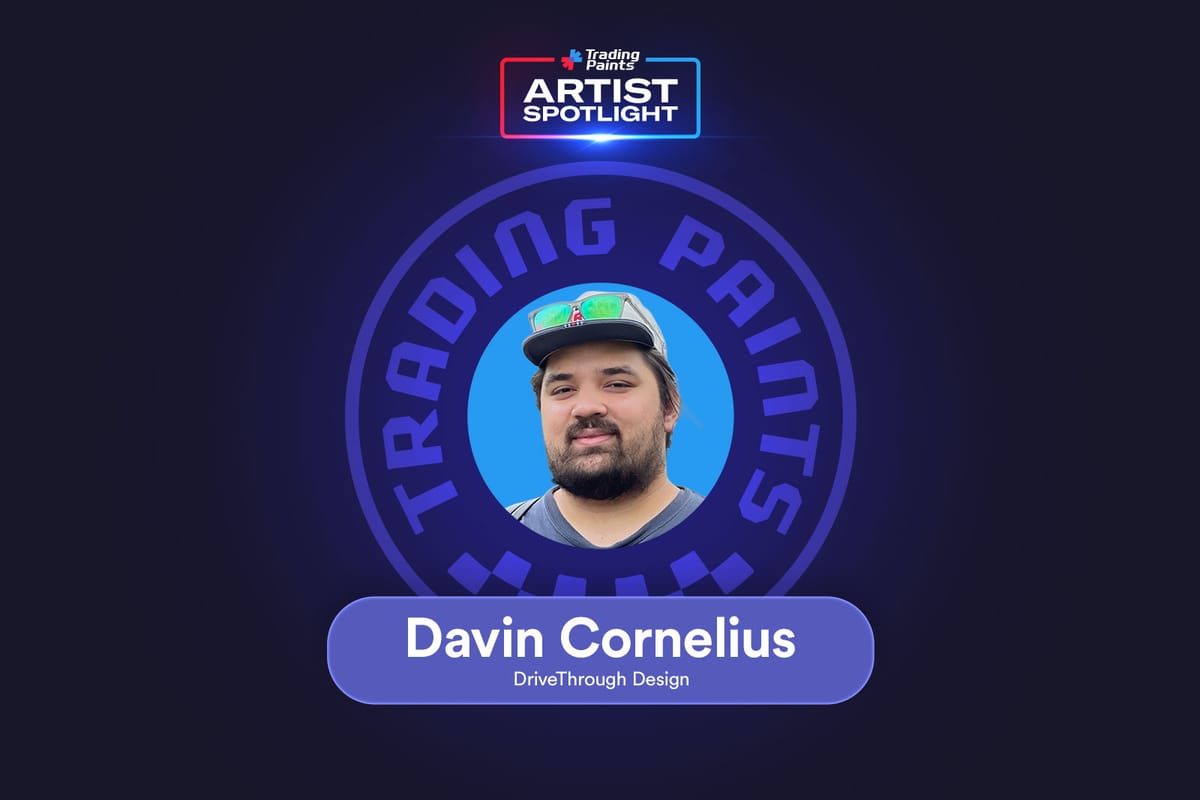
Spending more time designing in racing games as a kid than racing cars themselves, it was the start to a unique path in motorsports and sim racing design for a well-known member of the Trading Paints community, Toronto’s own Davin Cornelius.
1️⃣ How did you get your start designing?
From a really young age, I’ve always loved racing video games, and driving the coolest looking cars was always really important to me. In games like Need for Speed Carbon on the PS2 and Midnight Club LA on the PS3, a young Davin would spend countless hours carefully placing decals for custom paint jobs or pseudo-recreations of real-world cars.
Moving over to the computer for NASCAR Racing 2003 Season really opened up the possibilities for designing paint schemes.
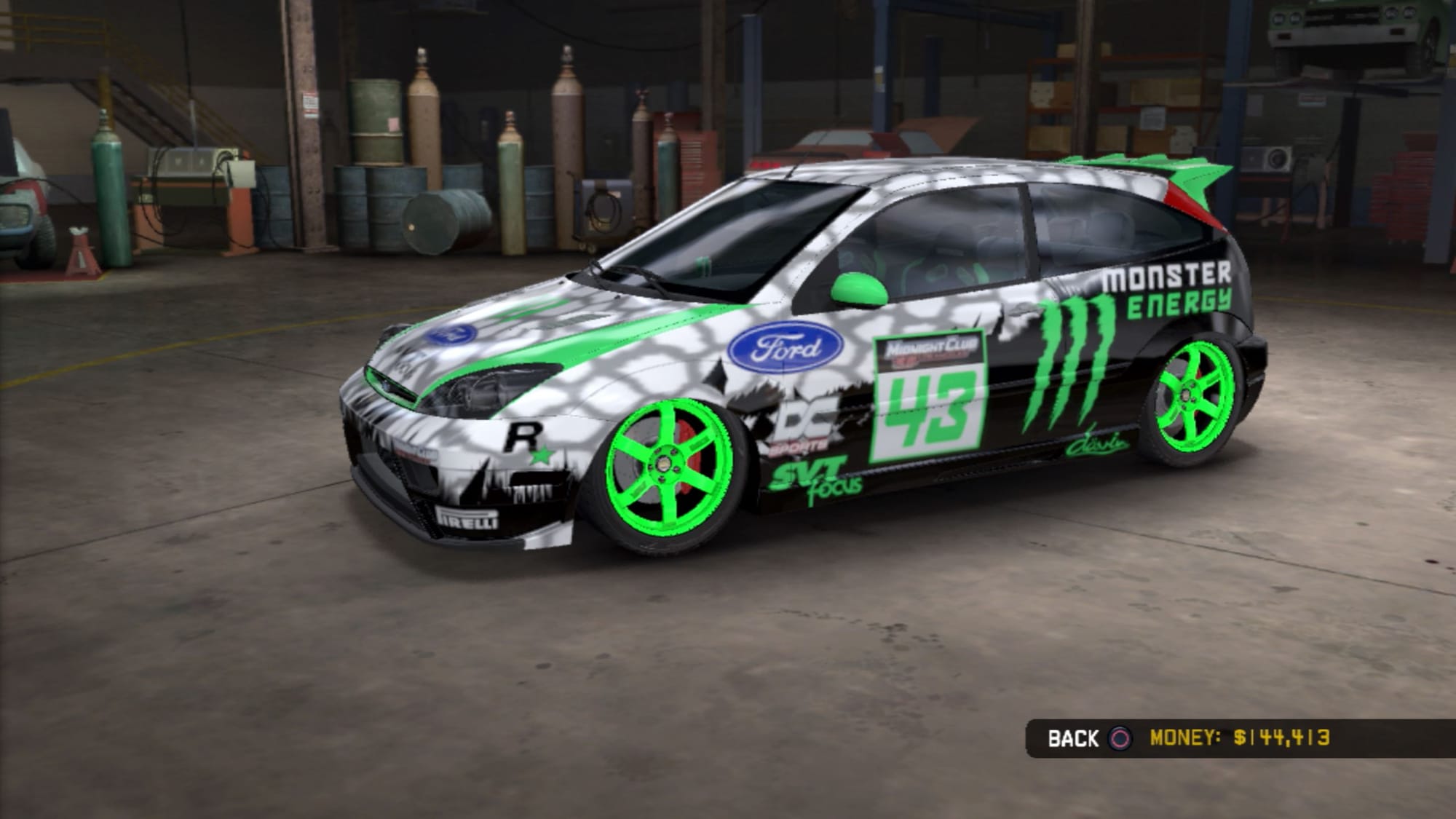
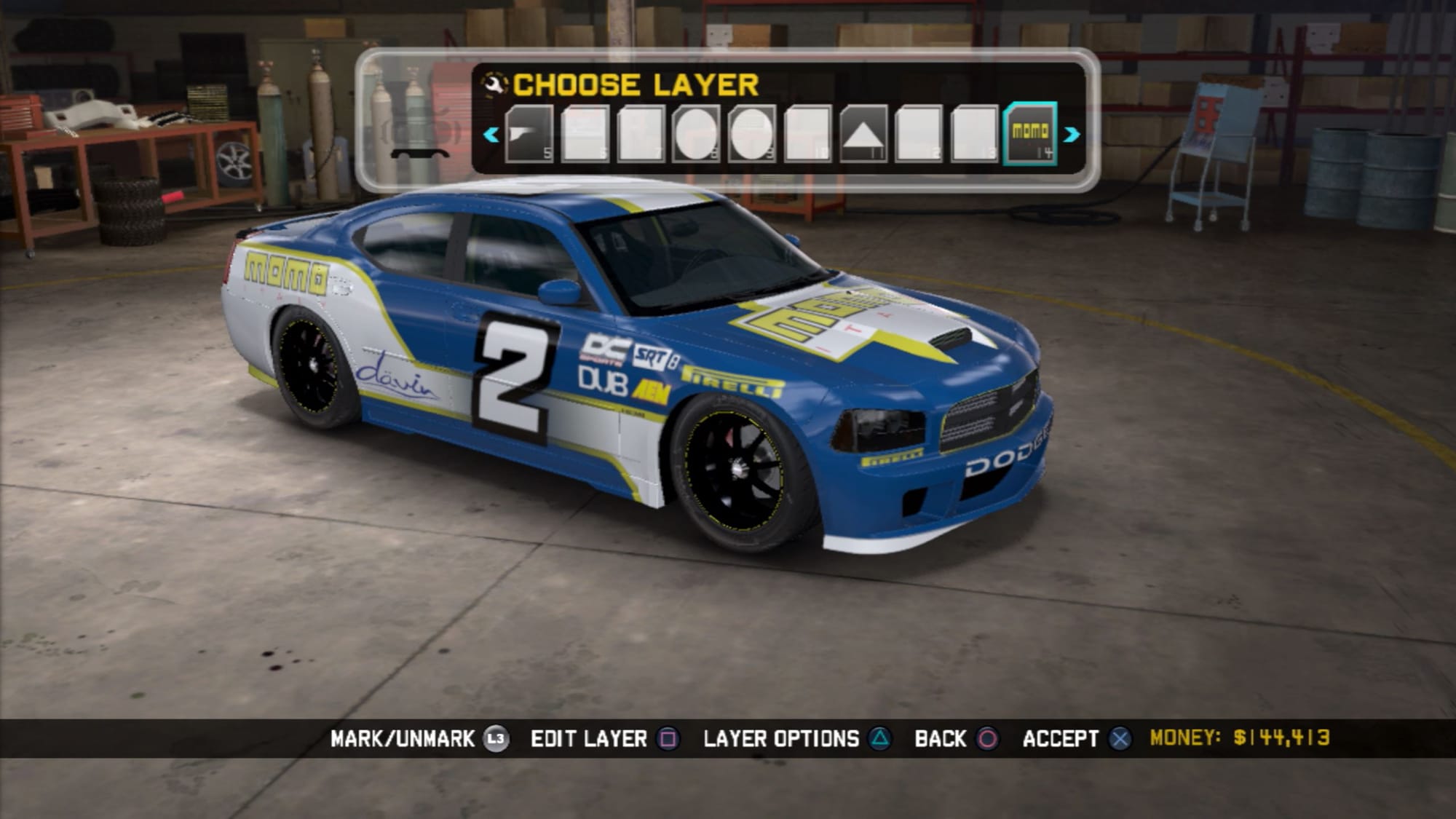
A “young” Davin with a skillset of a veteran designer. (Photo Credit: Davin Cornelius)
I started off designing cars to race on my own, and eventually started to gather fields of fictional race cars to live-stream race simulations on YouTube. I ended up learning how to design stock cars by painting entire seasons’ worth of NR2003 cars based on viewer requests, and fell in love with the process.
2️⃣ Where do you turn for inspiration?
I’m very much inspired by all of the great artists working in racing right now. There are so many fresh-looking cars hitting race tracks all around the world, and I do my best to keep up and collect my favorites.
I follow just about all of the motorsports designers that I can find on social media, and seeing their incredible work inspires me every day. I also love coming across cool design elements out in the urban wilderness — whether it’s signage, advertisements, or apparel, graphic design is everywhere.
3️⃣ What project of yours personally are you most proud of and why?
This year I had the pleasure of designing Ryan Vargas’ ride for the 2025 NASCAR Canada Series season. The first ever race I saw in person was the NASCAR Canada Series and every year I make two trips out to the legendary Canadian Tire Motorsport Park to go camping and watch the races, so getting to see my design lead laps at my favorite track in my favorite series was beautiful.
I got to meet the team and they even put my website on the decklid! I also had the opportunity to flex my design muscles on a t-shirt to celebrate the season. It really pushed my graphic design skills, I learned a lot in the process, and I’m very proud of the results.
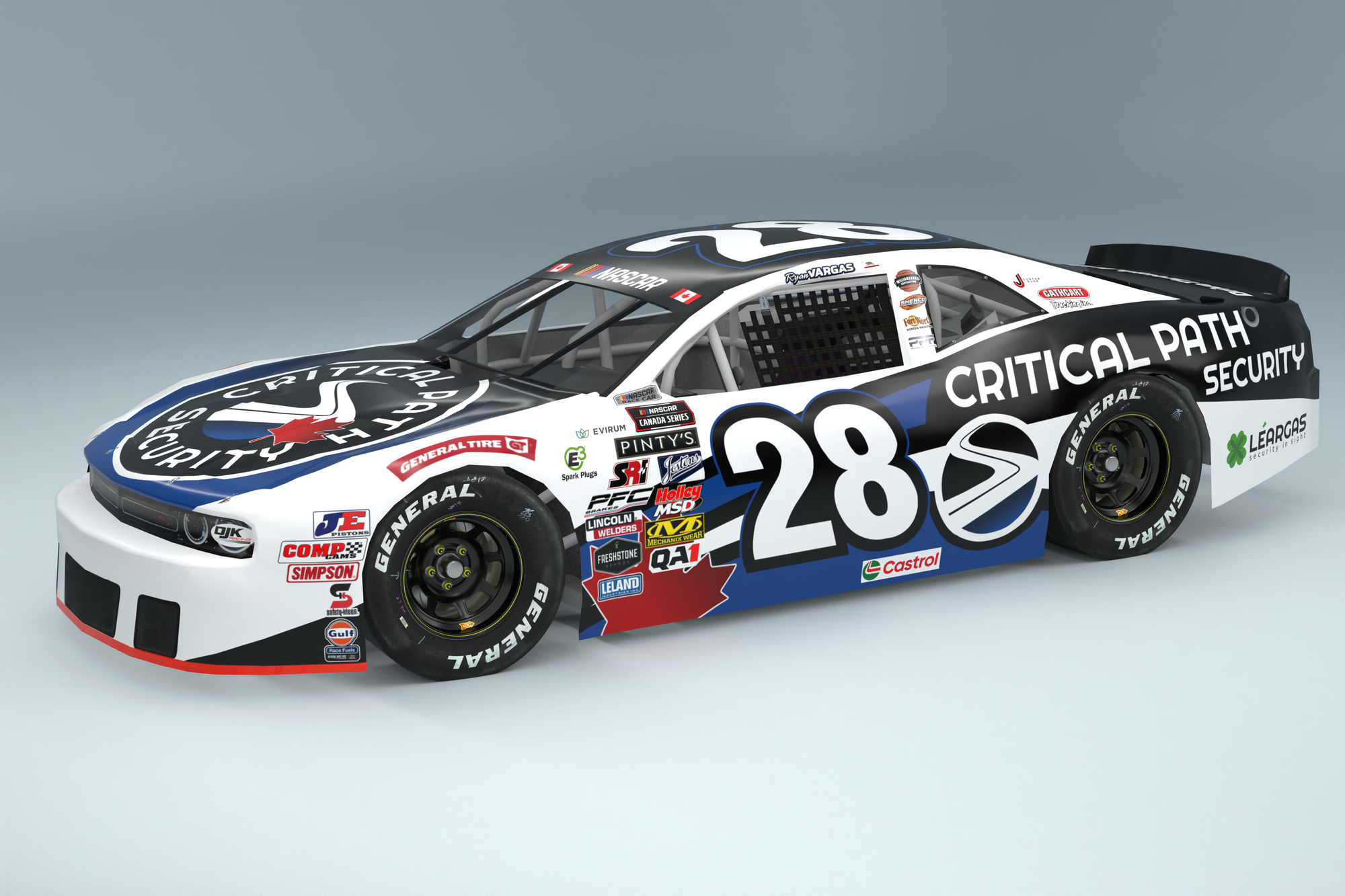
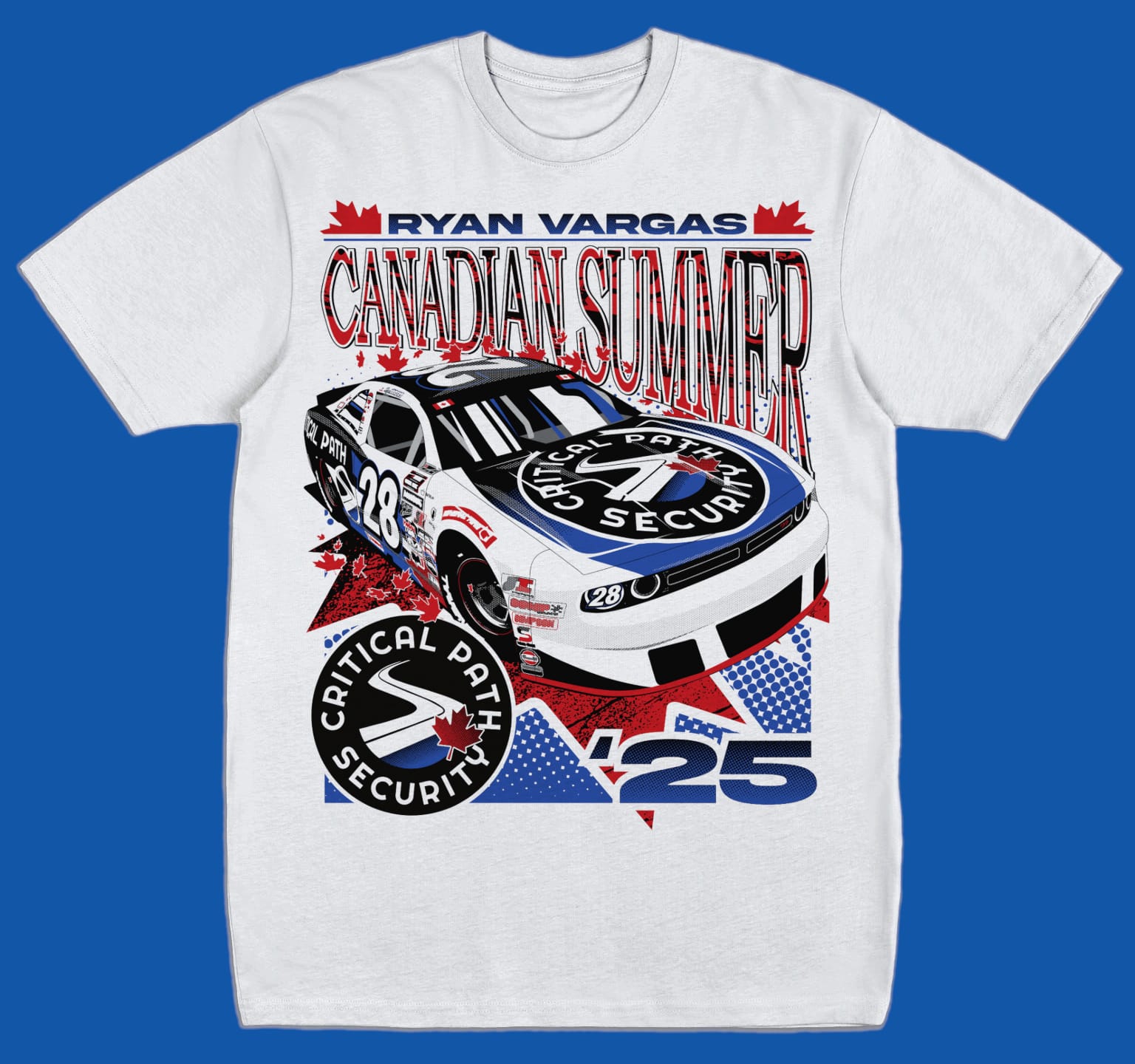
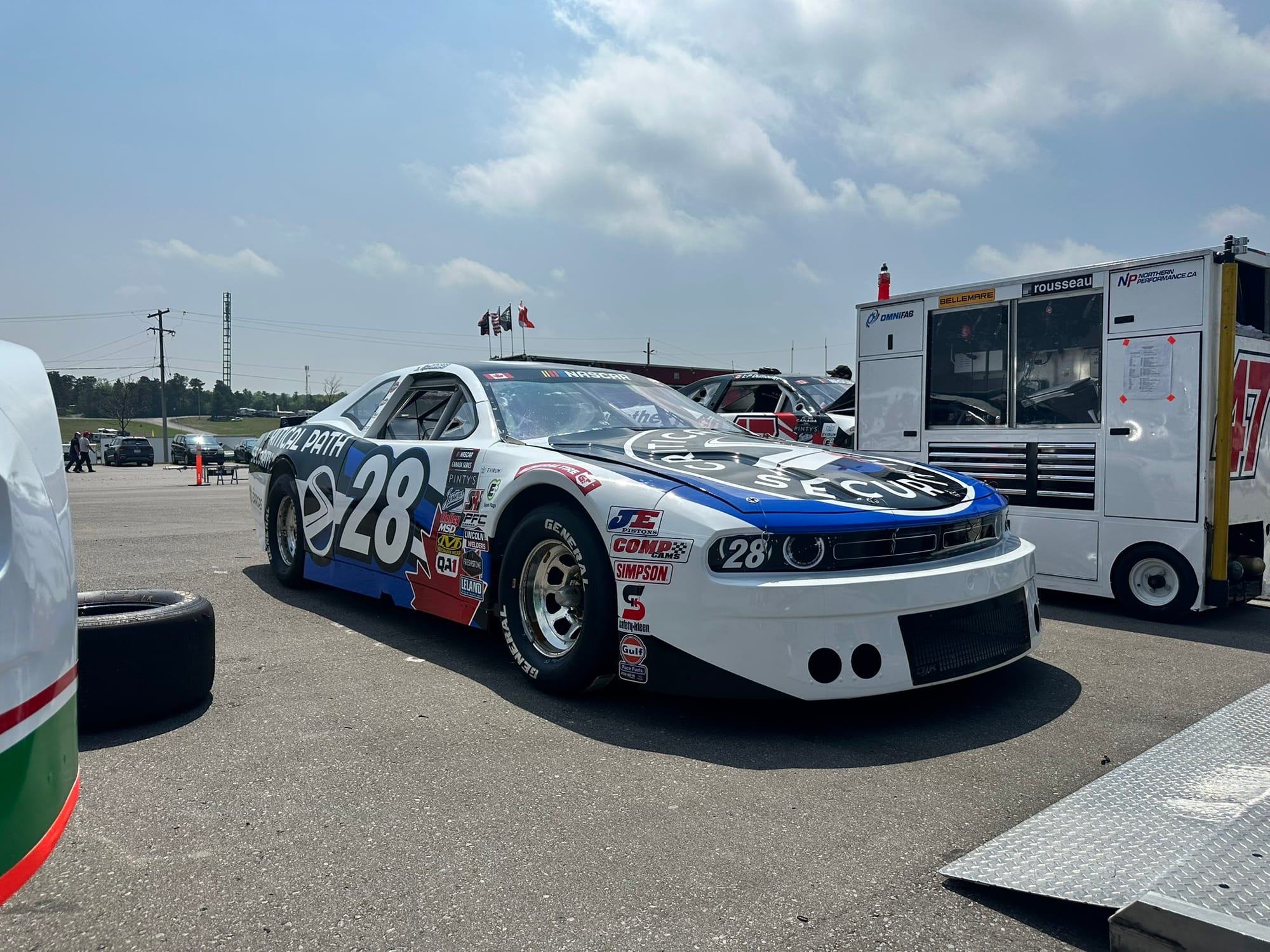
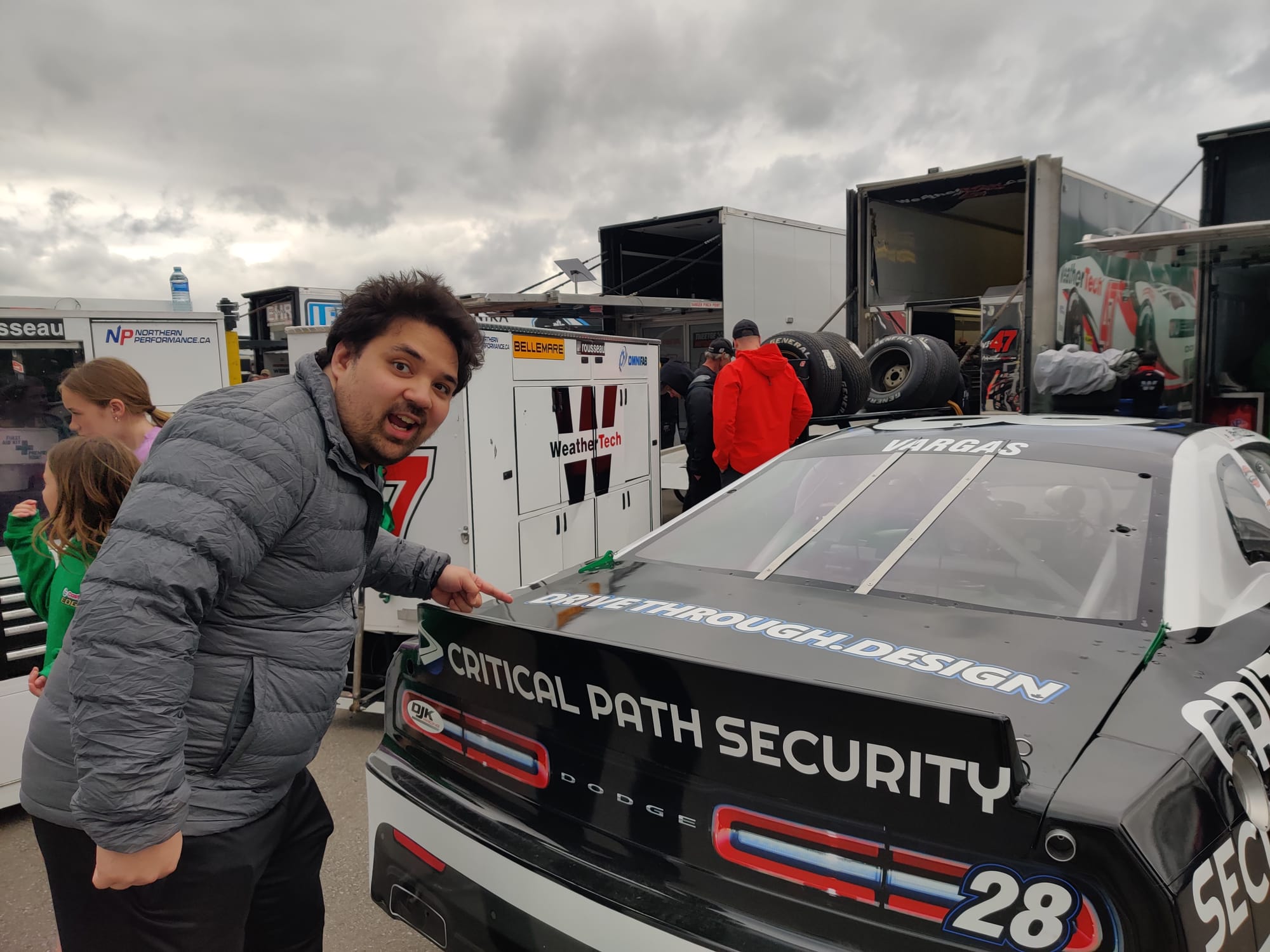
Every great paint scheme needs a matching shirt, right? (Photo Credits: Davin Cornelius)
4️⃣ What's your ‘trademark’ style that helps you stand out from other designers?
I really enjoy analyzing the work of other artists in the field, but it’s surprisingly hard to put my own style into words. I’d like to think that I have a pretty versatile set of skills, and my style will probably be something that grows and changes with me over time, but right now I’m obsessed with getting an overall sense of motion across each of my livery designs. Whether I’m using smooth, flowy curves, or sharp, angled corners, I make sure every element works together to enhance the look of a moving race car on a race track.
5️⃣ Where did the name “DriveThrough Design” originate from?
My whole career in design stemmed from a YouTube channel l made as a teenager, and I have to thank NASCAR Racing 2003 Season once again for bringing it all together.
I grew up watching YouTube videos about video games, and always dreamed of creating my own channel. Having watched all sorts of video game walkthroughs, I figured that the racing game equivalent should be referred to as a DriveThrough. Ultimately I ended up gaining popularity with the simulated NR2003 races, instead of actual game walkthroughs, but the name stuck.
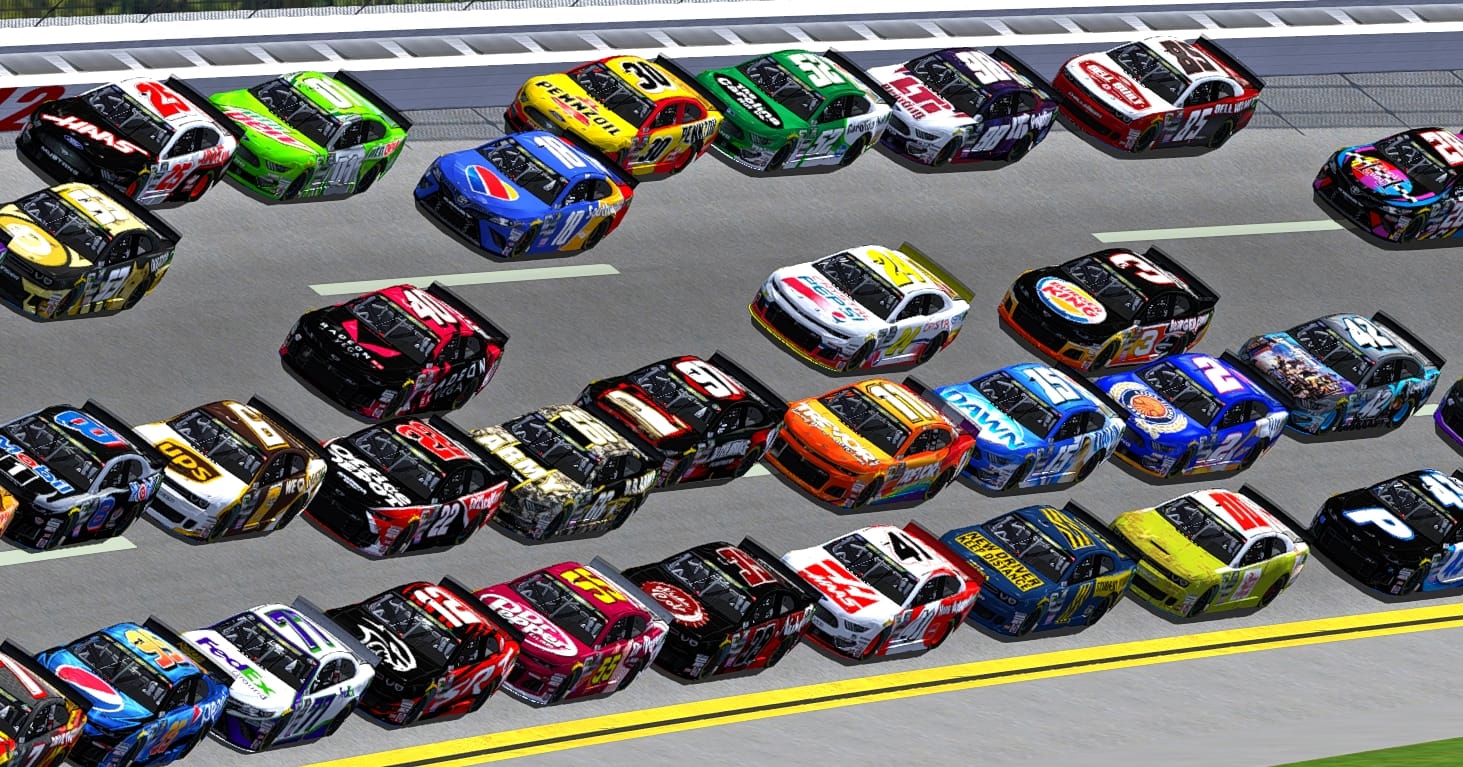
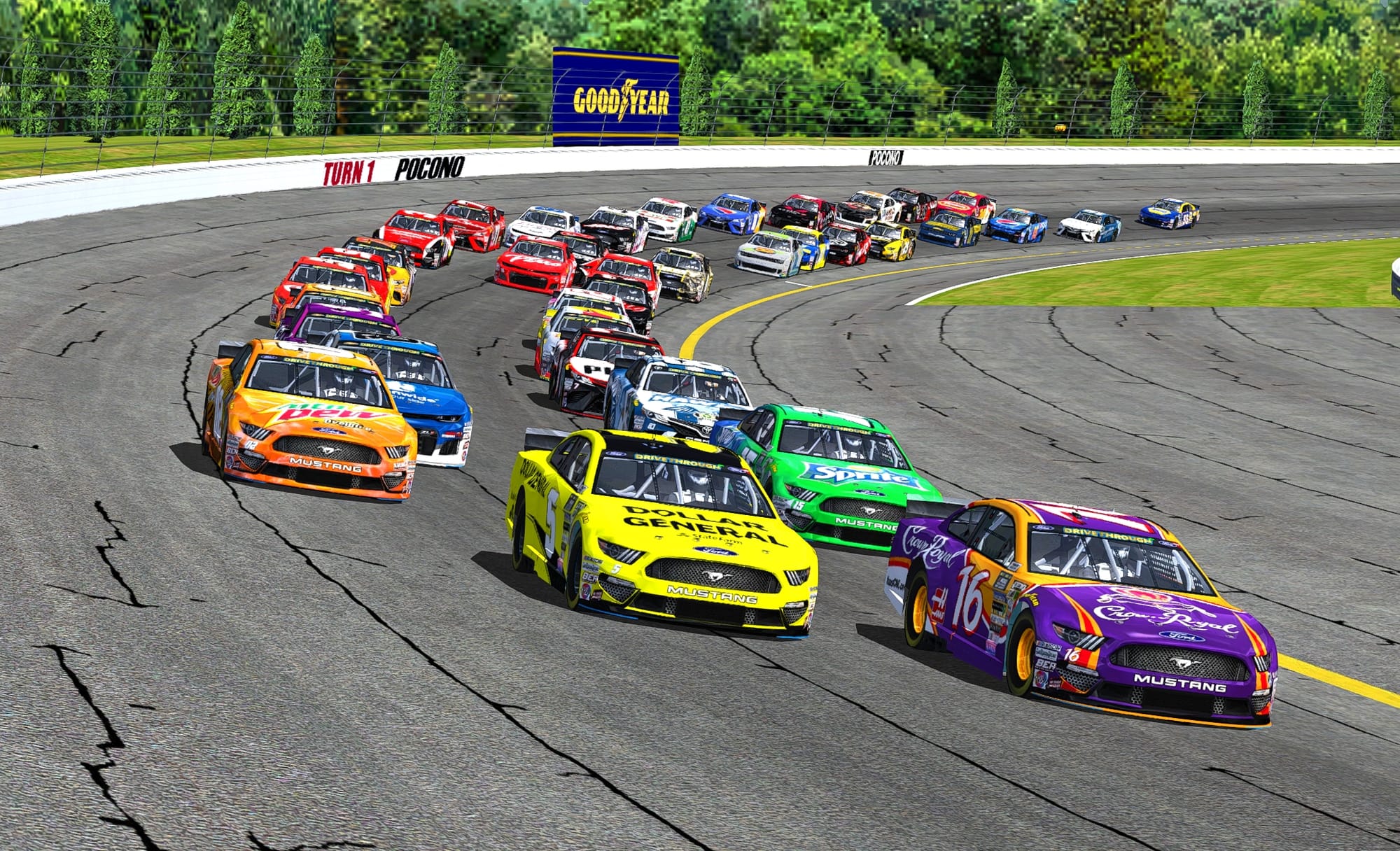
For someone whose work portfolio featuring iRacing is rooted in the iconic NASCAR Racing 2003 Season PC game, it’s beautifully poetic. (Photo Credits: Davin Cornelius)
It’s served me well so far, but admittedly it’s probably not the best for search engine optimization or to differentiate myself from someone that might design fast food serving lanes. This was unfortunately made apparent when my first ever paycheck for design work (from a now-defunct Canadian race team) was made out to “David” at “Drive Thru Design” but I guess we as designers are the ones paid to pay attention to the details.
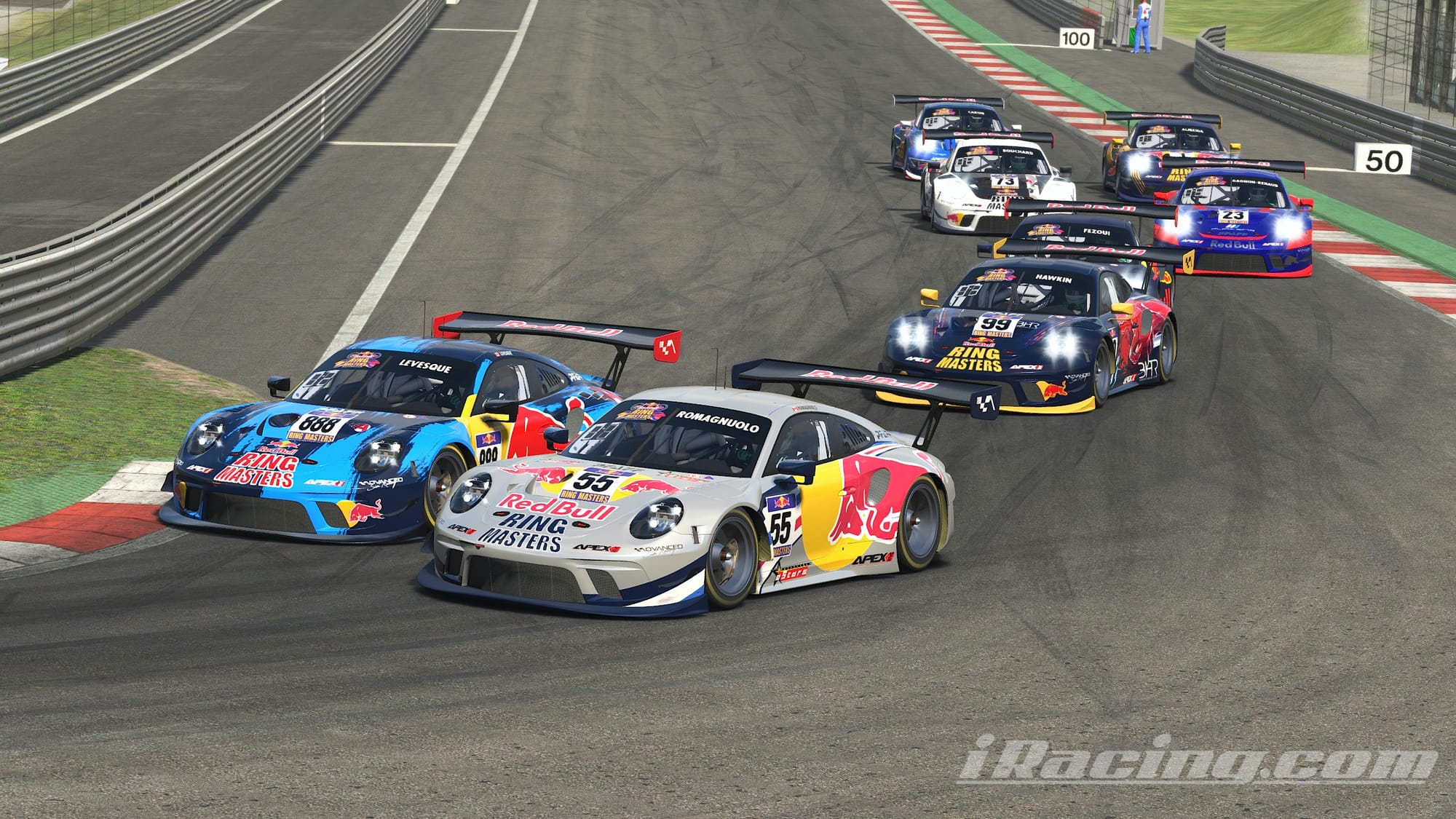
6️⃣ You had the opportunity to design the iRacing liveries for Red Bull Canada’s Ring Master Competition. How were you able to find the creative mindset to design an entire field of cars and how was the experience working with such an iconic brand?
Working with Red Bull was nothing short of a dream come true. It was the first time I had worked with a big brand and they completely spoiled me by giving me a lot of creative freedom over the finalists’ liveries. Luckily for me, I had the unique experience having designed full fields of cars for my YouTube channel, and Red Bull was a brand so synonymous with motorsport that inspiration was plentiful.
I was so spoiled with choice that I couldn’t settle on a single idea, so I pitched the concept of having each of the competitors race a different Red Bull livery inspired by my favorites from around the world. They loved the idea, and even brought me out to the event in person and had an interview with me as part of the iRacing broadcast. I was able to make so many great connections and I’m so thankful for the experience.
7️⃣ In January 2022, you received your first shot at designing a real-world NASCAR entry with Jason White and Team Reaume. Looking back, what was that pressure like to create your first design while being under such a tight timeline with Daytona only a month away?
By the end of 2021 I had a solid amount of experience designing virtual race cars for various video games and simulators, but the few real-world designs that I had put together never ended up hitting the race track. However, only a month before the 2022 season, some good friends in the Canadian racing community let me know that NASCAR Canada Series veteran Jason White was going to attempt the Truck Series race at Daytona and needed a paint scheme for the occasion.
Coincidentally, I had already planned to make my first ever trip to an American NASCAR race for that opening weekend, so I knew I had the exciting opportunity to see my first ever design race in person. Luckily, with the guidance of some of my more experienced friends in the industry, I was able to get a design out to the team with only a couple of late nights shuffling vectors around on the computer.
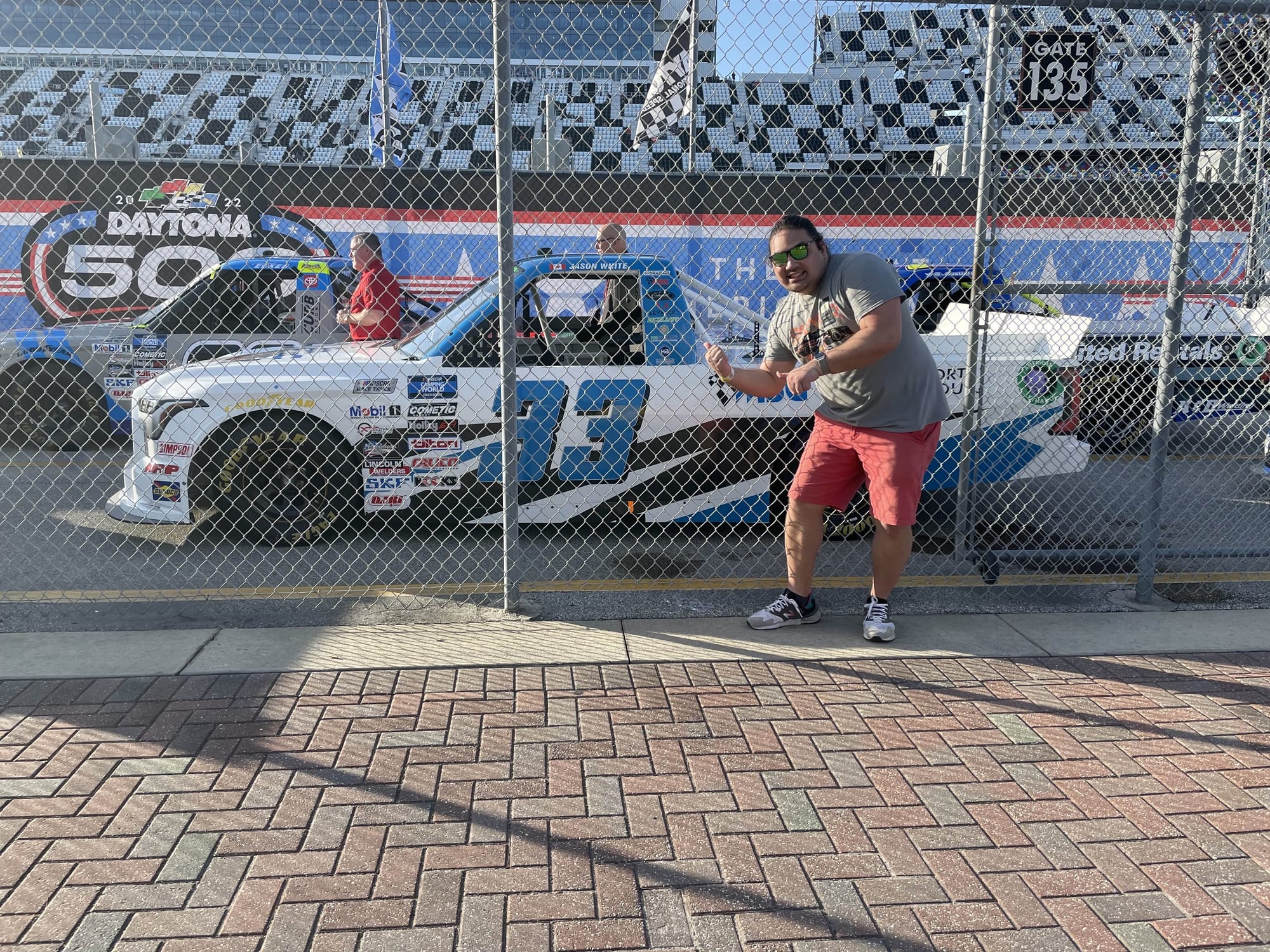
Designing your first real on-track paint scheme and your first visit to an American NASCAR race in the same weekend is one achievement not many can say they’ve earned. (Photo Credit: Davin Cornelius)
Ultimately the sponsorship changed and it only ended up being a partial wrap, but I was still over the moon that I could achieve my dream of designing a real-world race car. Seeing the lines that I drew on a race car going around Daytona was an unforgettable experience, and my friends and I were cheering on Jason from the grandstands all the way until he got wrecked on the final lap.
8️⃣ You made a great connection with Ryan Vargas and spent time designing across multiple entries for him with Léargas and Critical Path Security. When did you get the call that they would take that design from iRacing and bring it to the real world, and what was that experience like to go from “sim to reality”?
Ryan is such a positive voice in the racing community and I’m so proud to have designed his rides, both in iRacing and the real world. We started racing on iRacing together in 2020, and in 2021 we had worked out a deal for me to transfer his real world paint schemes and upload them to Trading Paints.
In 2022, I started designing his paint schemes for his iRacing league races, including his first deal with Critical Path Security and Léargas Security. I worked closely with the great folks at Critical Path Security to come up with designs that complemented both of their brands, and they were so happy with the results that they wanted those exact designs on the NASCAR truck Ryan was racing in 2023.
Taking the design from “sim to reality” really highlighted the differences between the two worlds and just how much work goes into each design we see out on track. I was working closely with Ryan as he was shopping around his options for the upcoming season, so the design ended up getting pitched for a few different series and race teams, ultimately settling on the On Point Motorsports #30 truck. Those in the business will know it’s no small feat to convert an RGB raster iRacing paint scheme into a print-ready CMYK vector file for wrapping a real-world race car. Going through that process and paying attention to all of the little details was a big learning experience, and I have to say I’m really happy with the results. Unlike the Jason White truck, I finally got my first full wraps on a race track and the people over at Critical Path Security and Léargas still talk about how much they loved those designs and the impact it made on their companies.
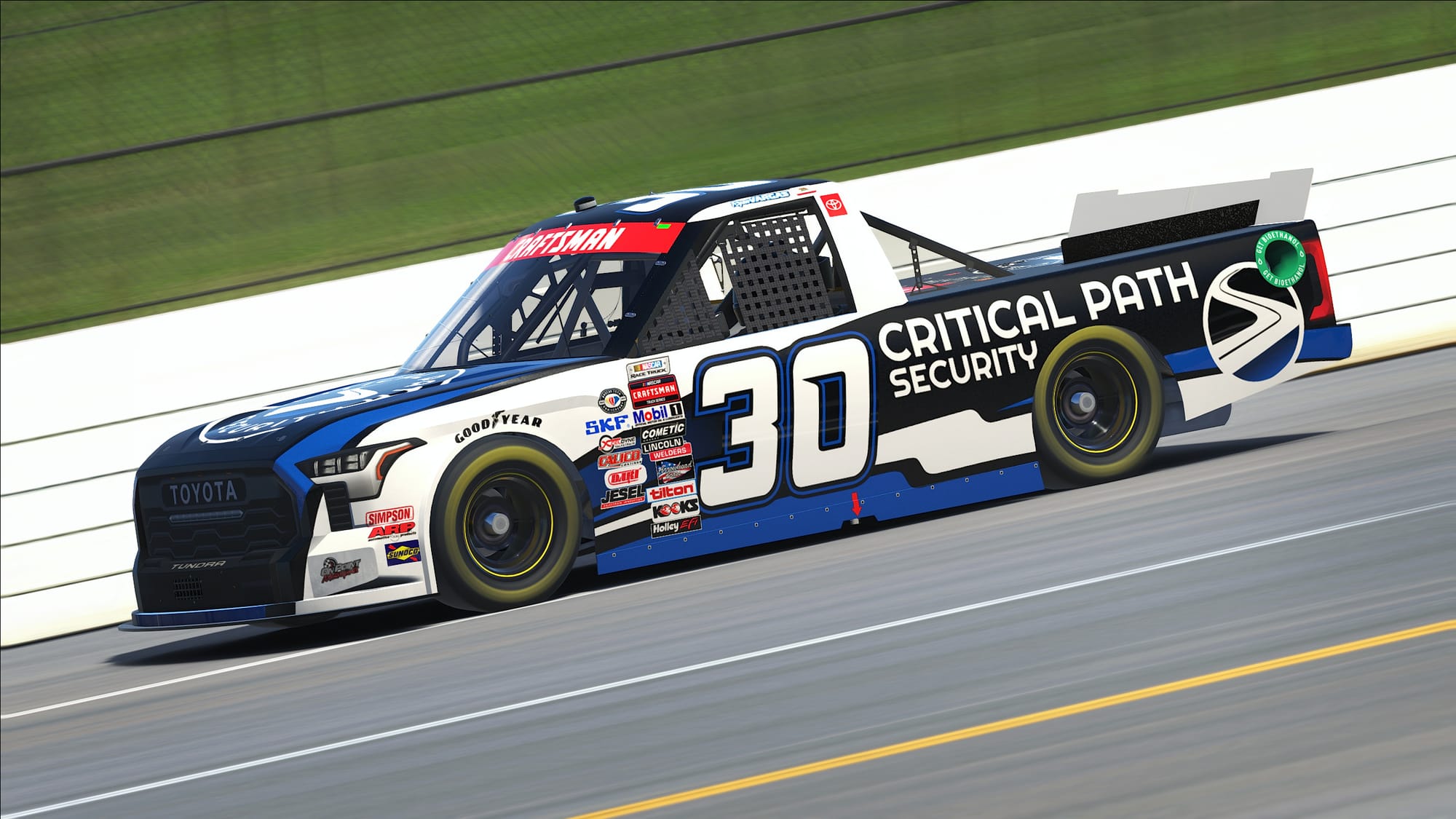
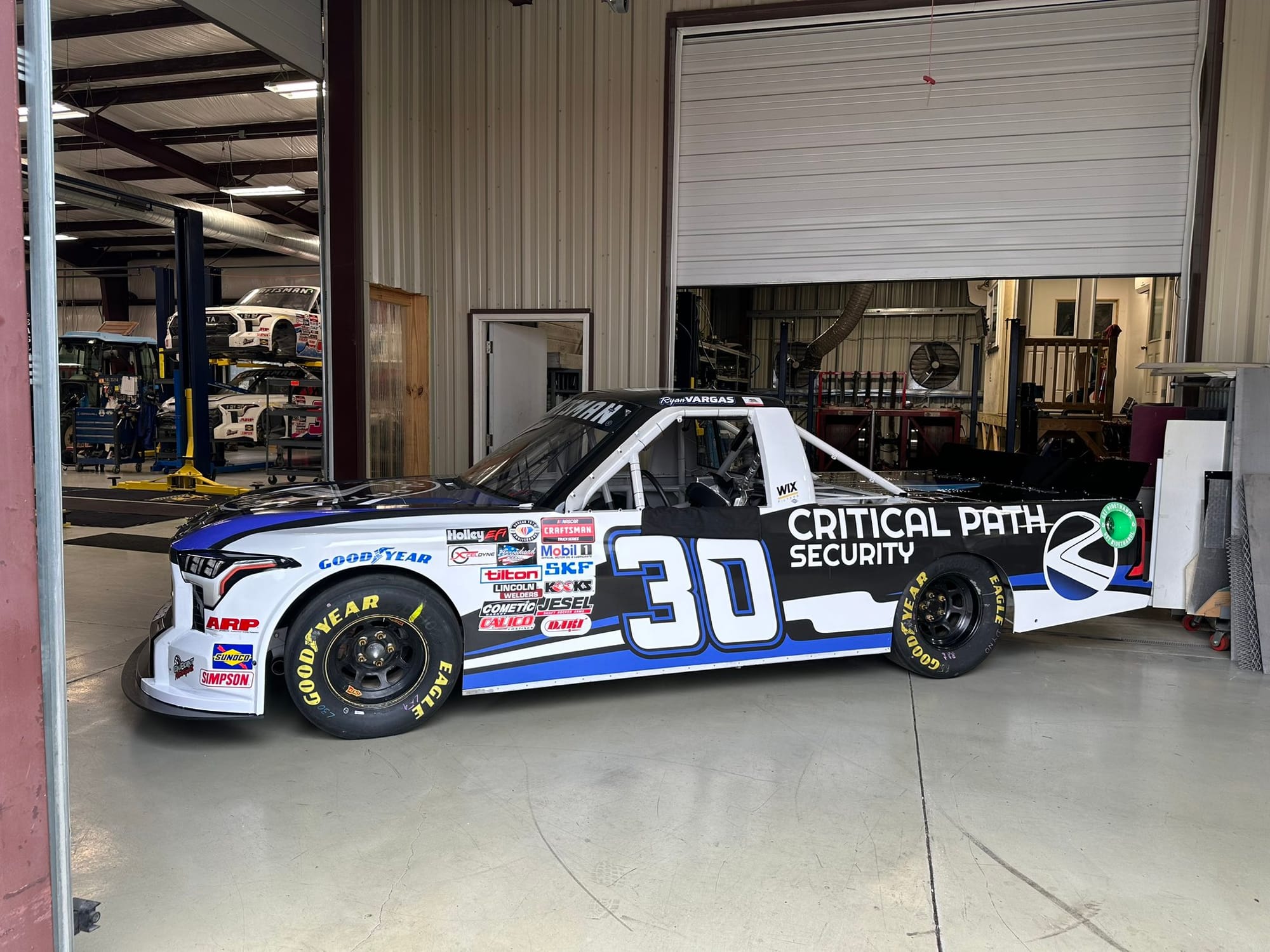
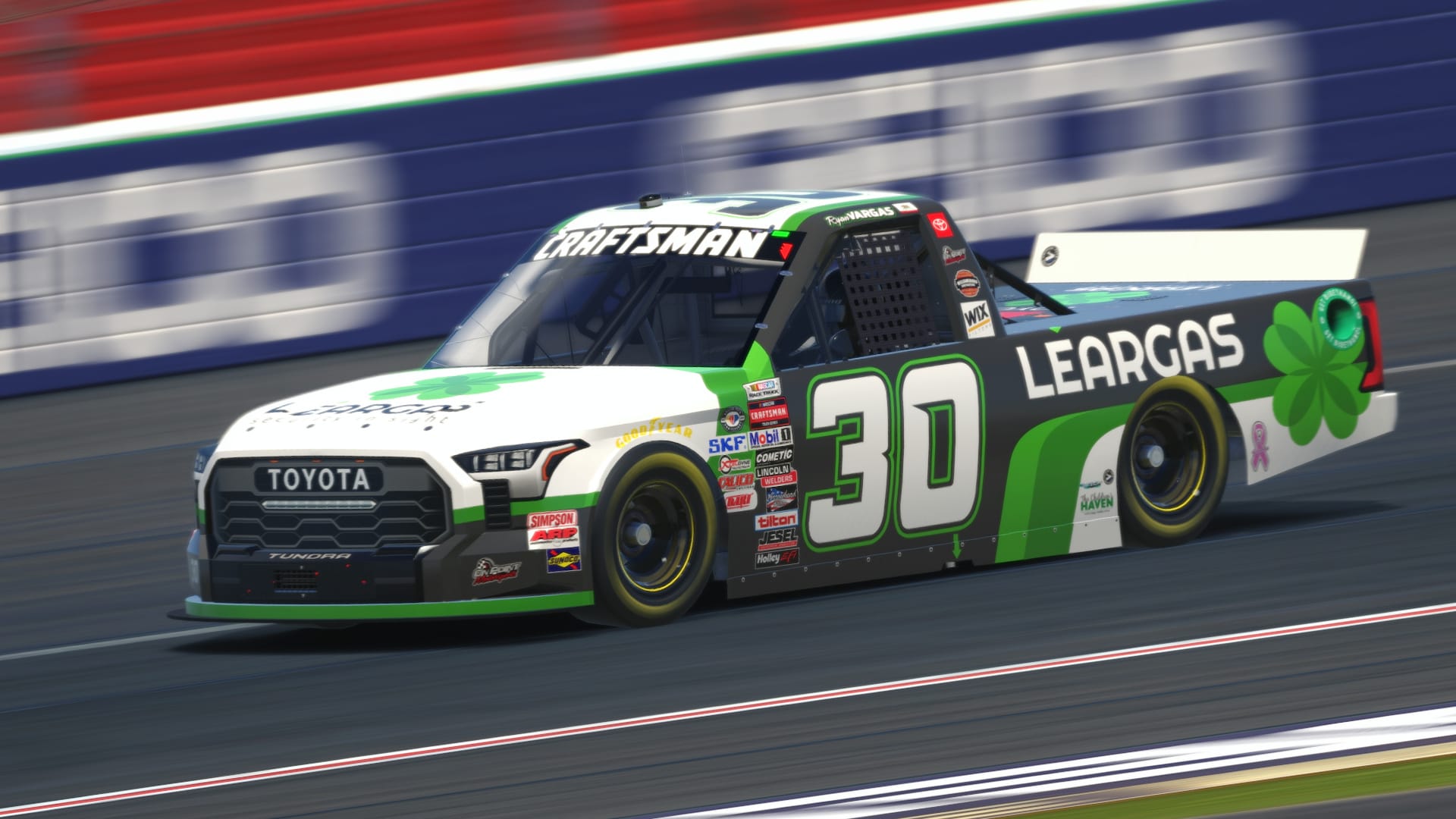
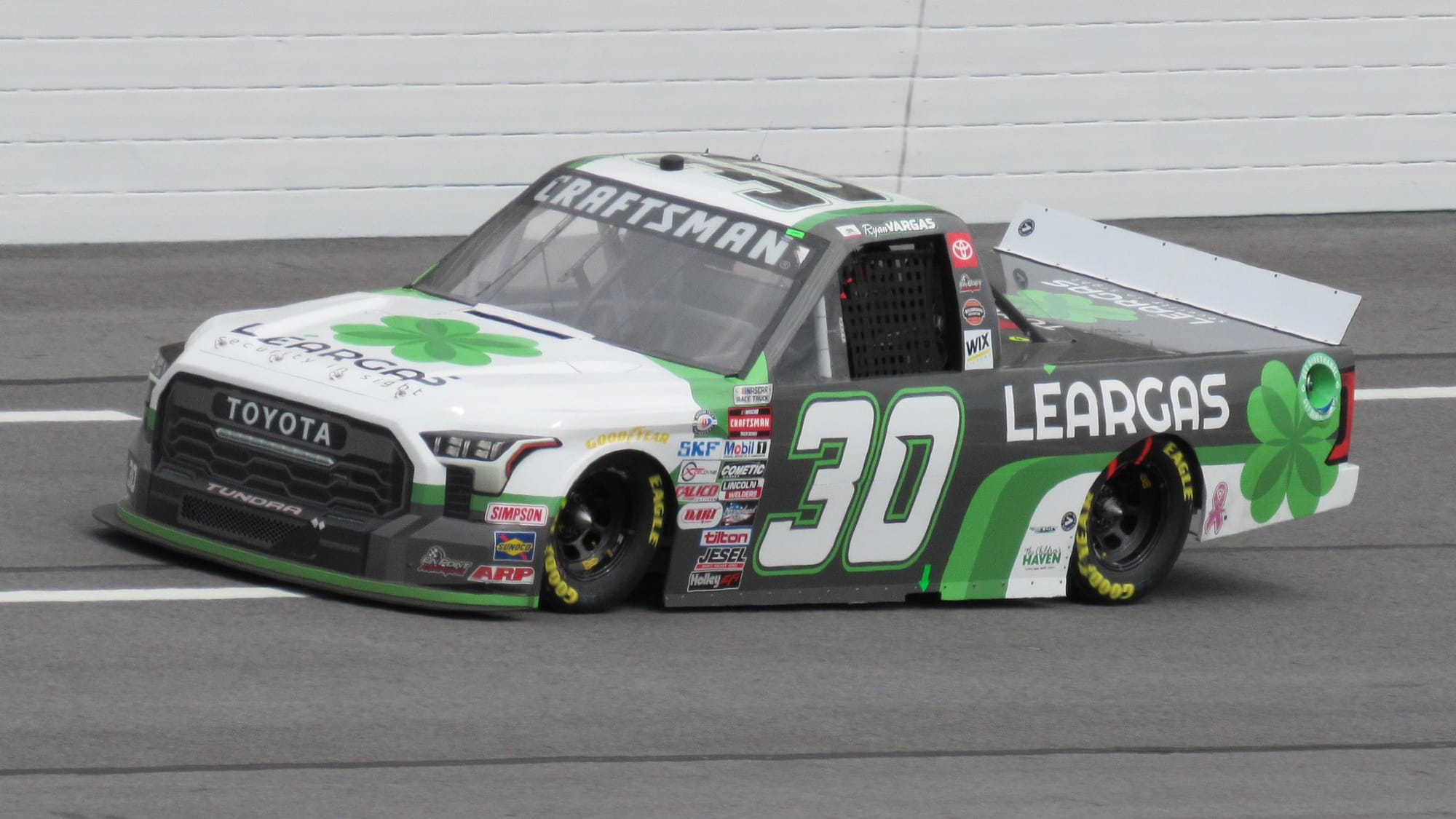
From sim to reality — twice. (Photo Credit: Davin Cornelius)
9️⃣ You’ve designed for a wide range of vehicles on iRacing and have shared them on Trading Paints. Which two vehicles would you say are the most fun to design, and which are the most challenging?
I truly feel at home designing stock cars on iRacing. It’s hard to pick a favorite among them, but I do really love the look of the new [NASCAR Cup Series] Next Gen Camry. I think it opens itself up to a lot of creativity, but I may also be biased because a Camry of mine finished runner-up in last year’s Trading Paints Paint of the Year voting. I’ve also had a lot of fun recently designing Super Formula cars for a league I raced in. They were a great way to explore designing open-wheel cars and they’re some of my favorite cars I’ve designed for myself to race.
As far as challenging cars to design for, the Dallara IR18 immediately comes to mind. I’m certain it was difficult to fit all three aero packages into one painting template and I love the way that the car looks but it’s a serious test of a designer’s chops. Getting all of the details nailed down on an IndyCar takes a huge amount of time and I have a great deal of respect for all of the awesome painters out there who can consistently pump out IR18s on Trading Paints.
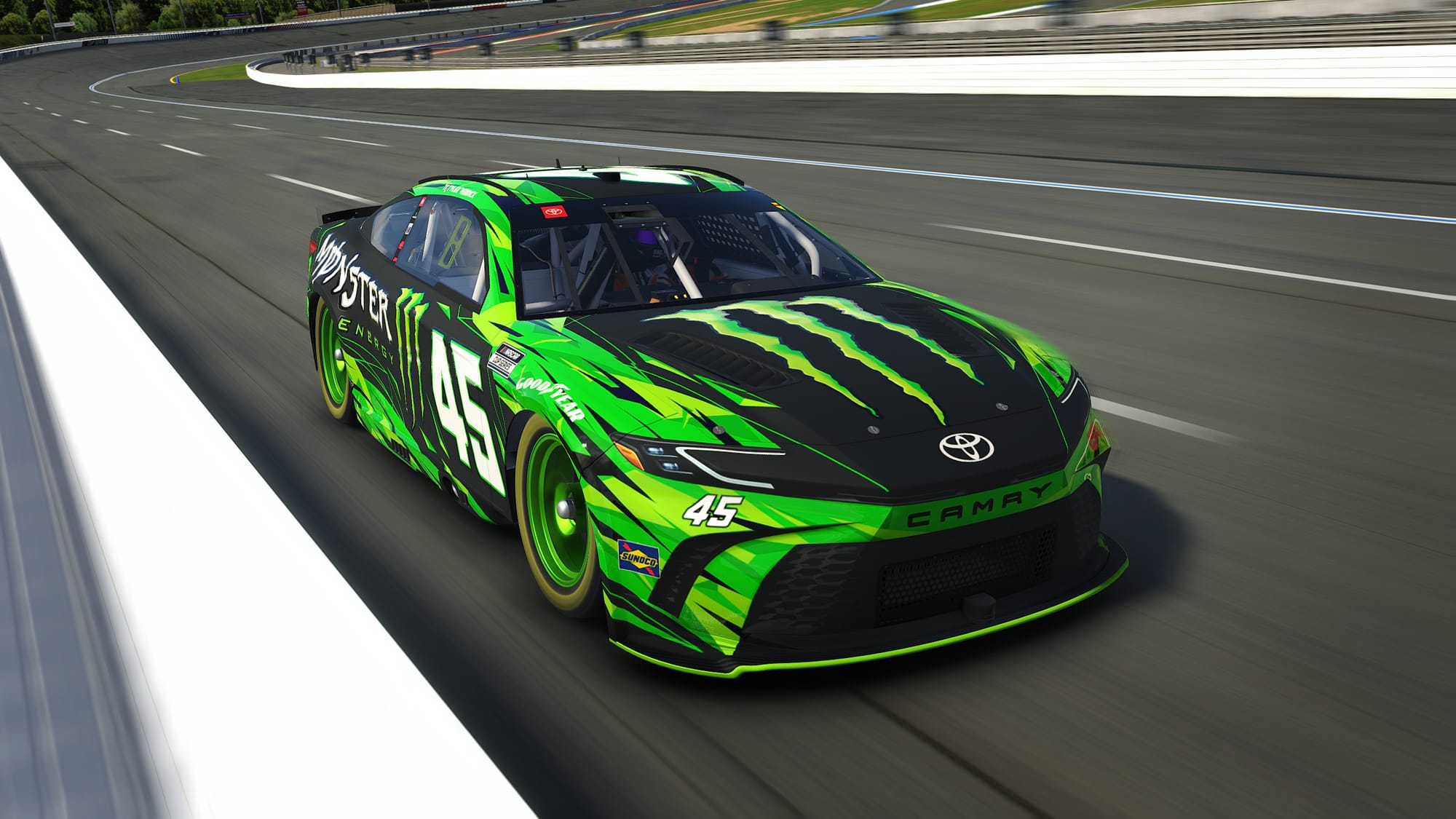
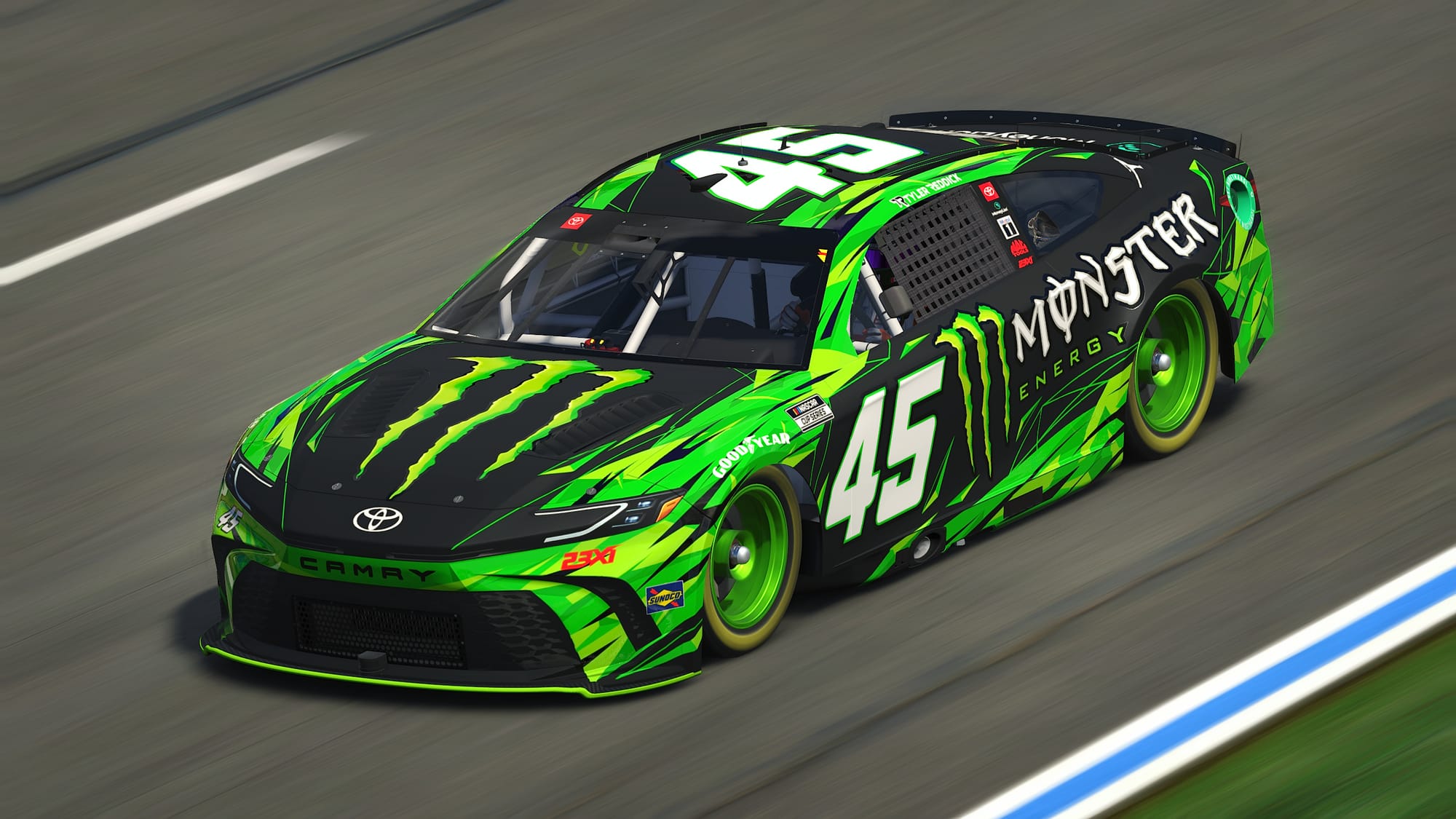
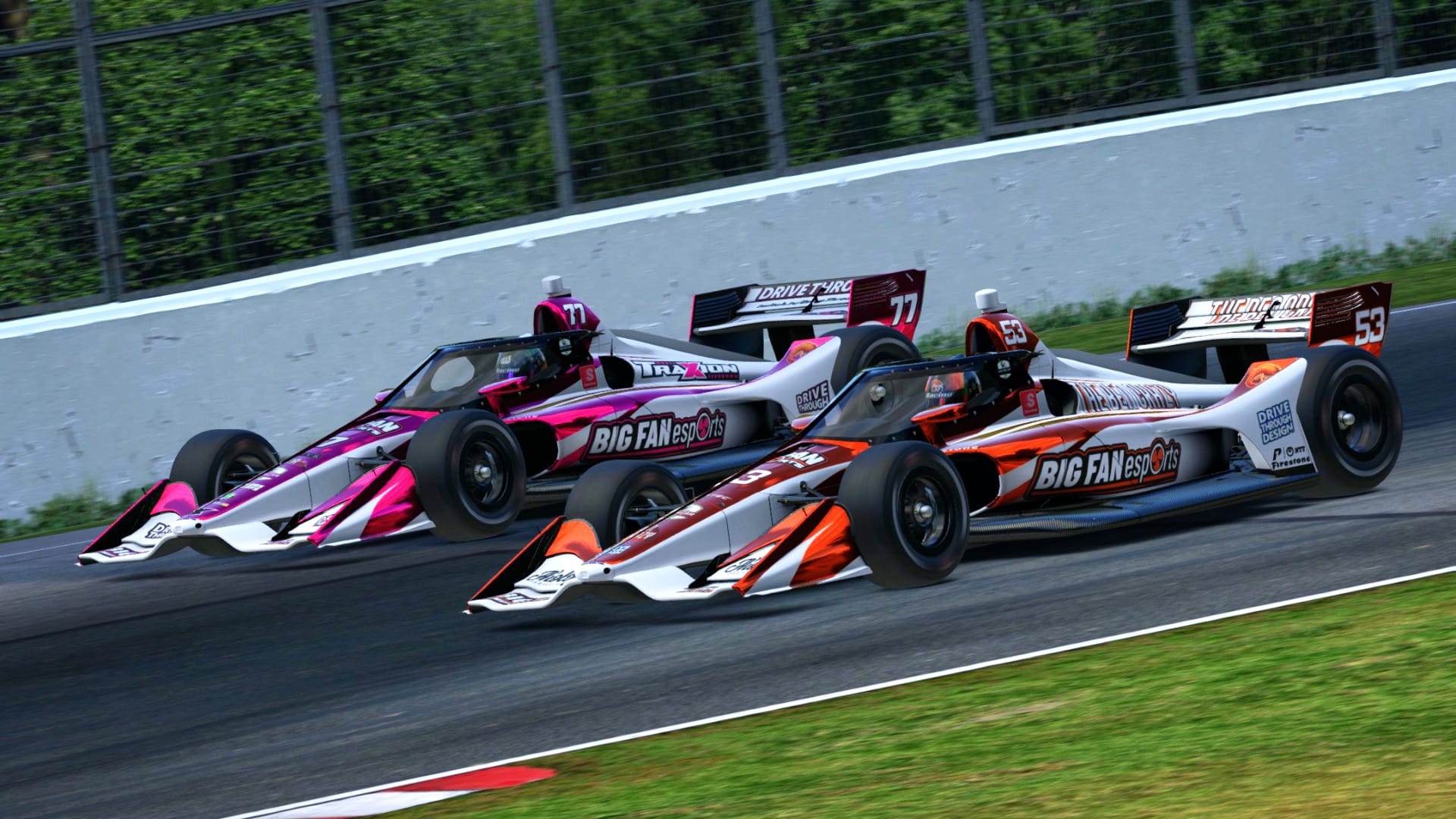
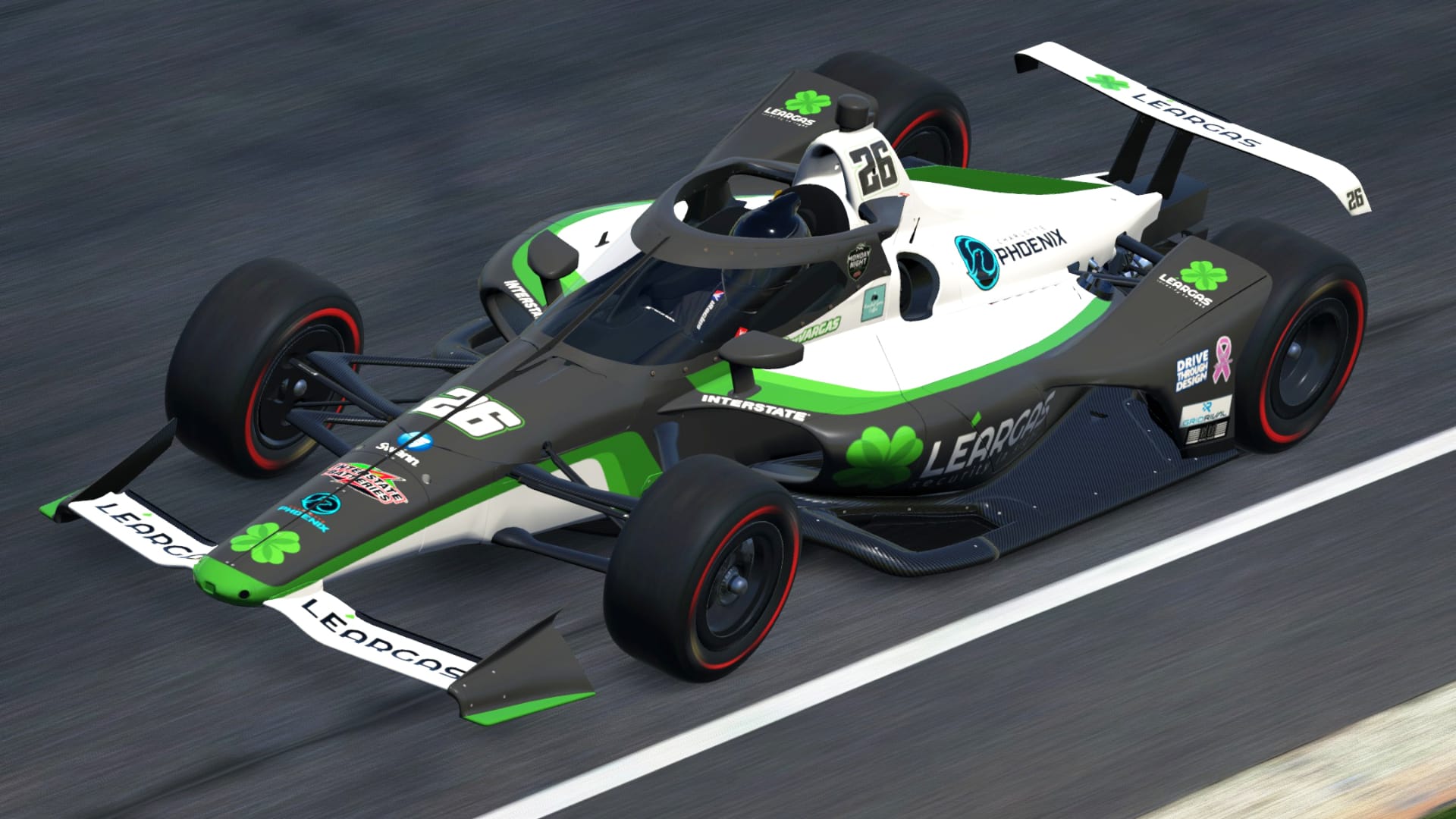
Some of Davin’s work on iRacing vehicles. (Photo Credit: Davin Cornelius)
🔟 Share a design tip for people just getting started.
You don’t need all the bells and whistles to be a designer; you just need an attention to detail and a willingness to learn.
I still make all of my iRacing paint schemes in a free and open source image editor (shoutout GIMP), and you can build all of your basic design skills before worrying about the industry-standard programs. If you have any questions or doubts about the process, there are countless tutorials on the internet to help guide your learning.
When it comes to design, I can’t overstate the importance of paying attention to details. I love analyzing every single aspect of a design and figuring out which specific design elements make it aesthetically pleasing to me. If you can understand what you like and why you like it, start designing things for yourself and the rest will follow.
Just make stuff that you think is cool and I’m certain you’ll find others who rock with your style.
For more, check out Davin on Trading Paints and Instagram.