Artist Spotlight: Noah Sweet
You may know him as ‘Lefty’ but now it’s time you meet Grass Lake, Michigan’s own Noah Sweet.

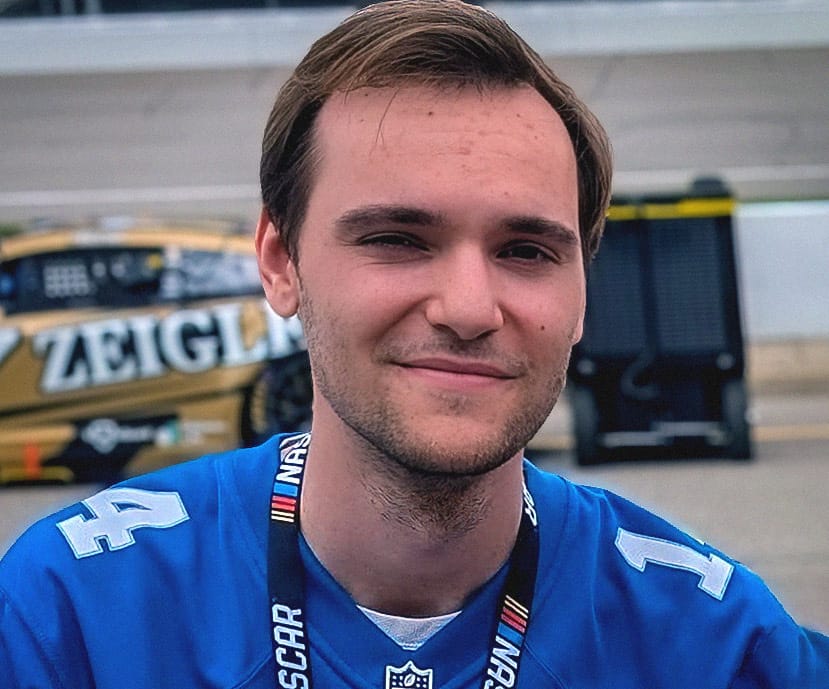
With an ever-evolving push to leave nothing on the table, Noah Sweet’s highly-regarded designs and animations have commanded the eyes of thousands, from NASCAR’s juggernauts to even the sanctioning body itself.
1️⃣ How did you get your start designing?
I got a laptop for my thirteenth birthday alongside a Wacom tablet that allowed me to take my drawings and translate them to design heavy compositions with text, real imagery, grids, etc. The more I explored the possibilities of graphic design, I realized that I could translate it towards graphical mods for some of my favorite video games, primarily NASCAR Racing 2003 Season. It was a super accessible racing sim that allowed me to interact with online forums full of other creators who make and provide templates and resources just for paint scheme creation. I haven’t stopped making race car designs since then.
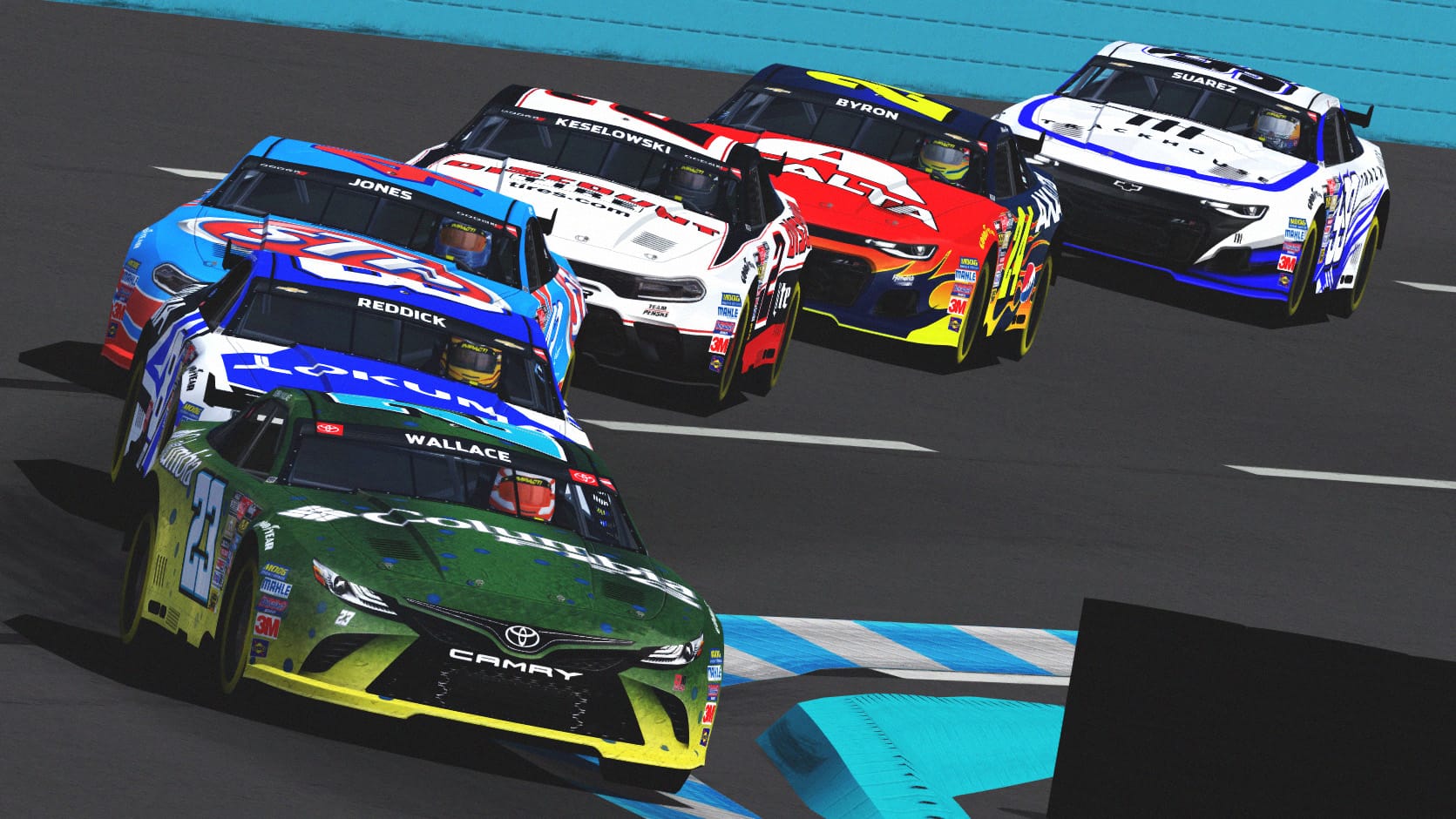
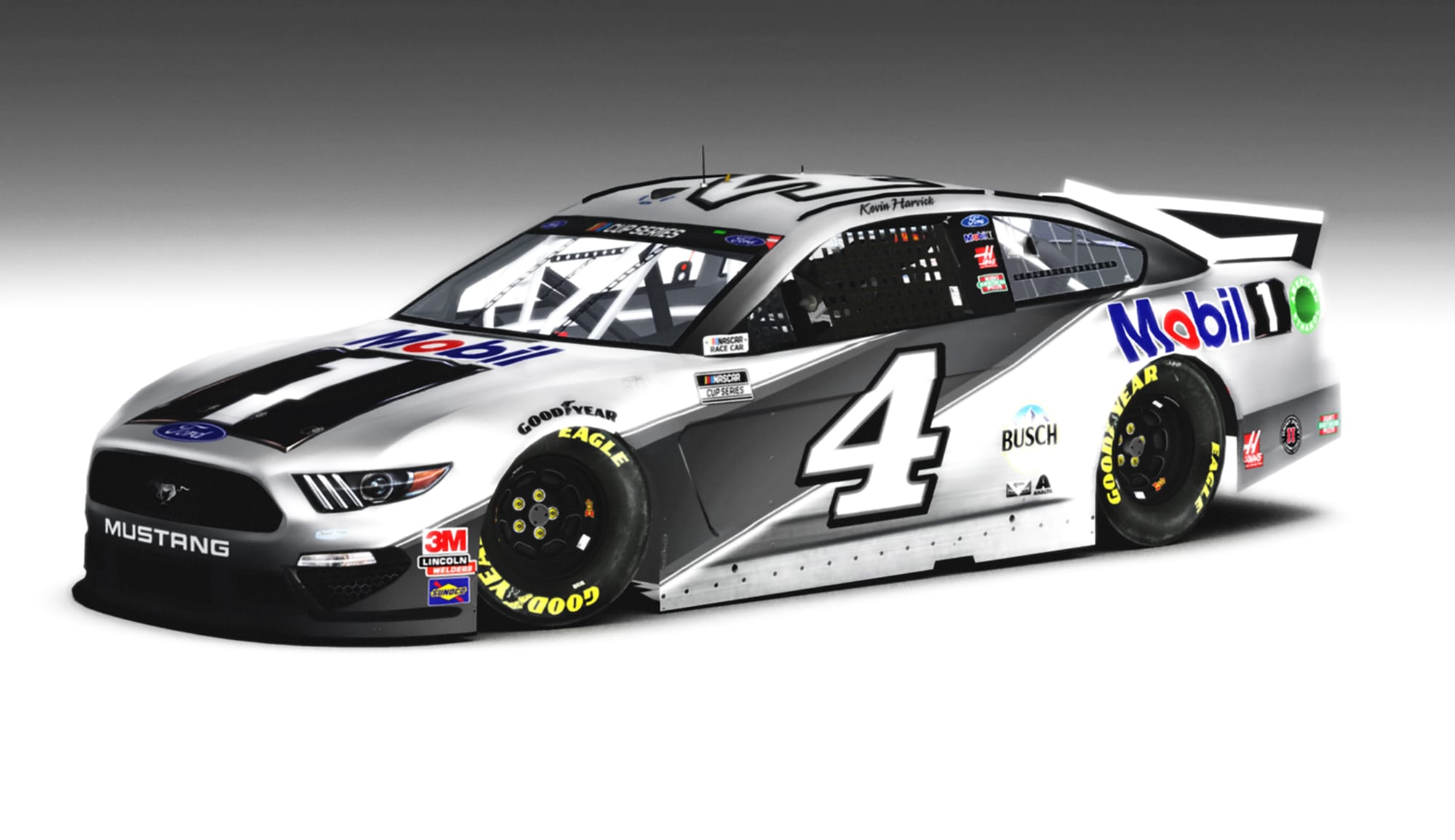
As many NASCAR designers begin today, NR2003 played a role in Noah’s design development. So much so, he’ll occasionally revisit what started it all. (Photo Credits: Noah Sweet)
2️⃣ Where do you turn for inspiration?
I often pull inspiration from everything I observe and consume, whether it be movies, billboards, someone’s outfit at the store, anything. With how often myself and others in the NASCAR design world have to flip something very quickly, you have to remain inspired almost all the time. It certainly isn’t easy to do something new every year, month, week, or day, given the task.
3️⃣ What project of yours personally are you most proud of and why?
I would really like to say the last project I worked on is what I’m most proud of, but sometimes I’m left wanting more out of what I’m working on. Especially when the deadline doesn’t permit me to flesh out certain aspects of the project’s quality.
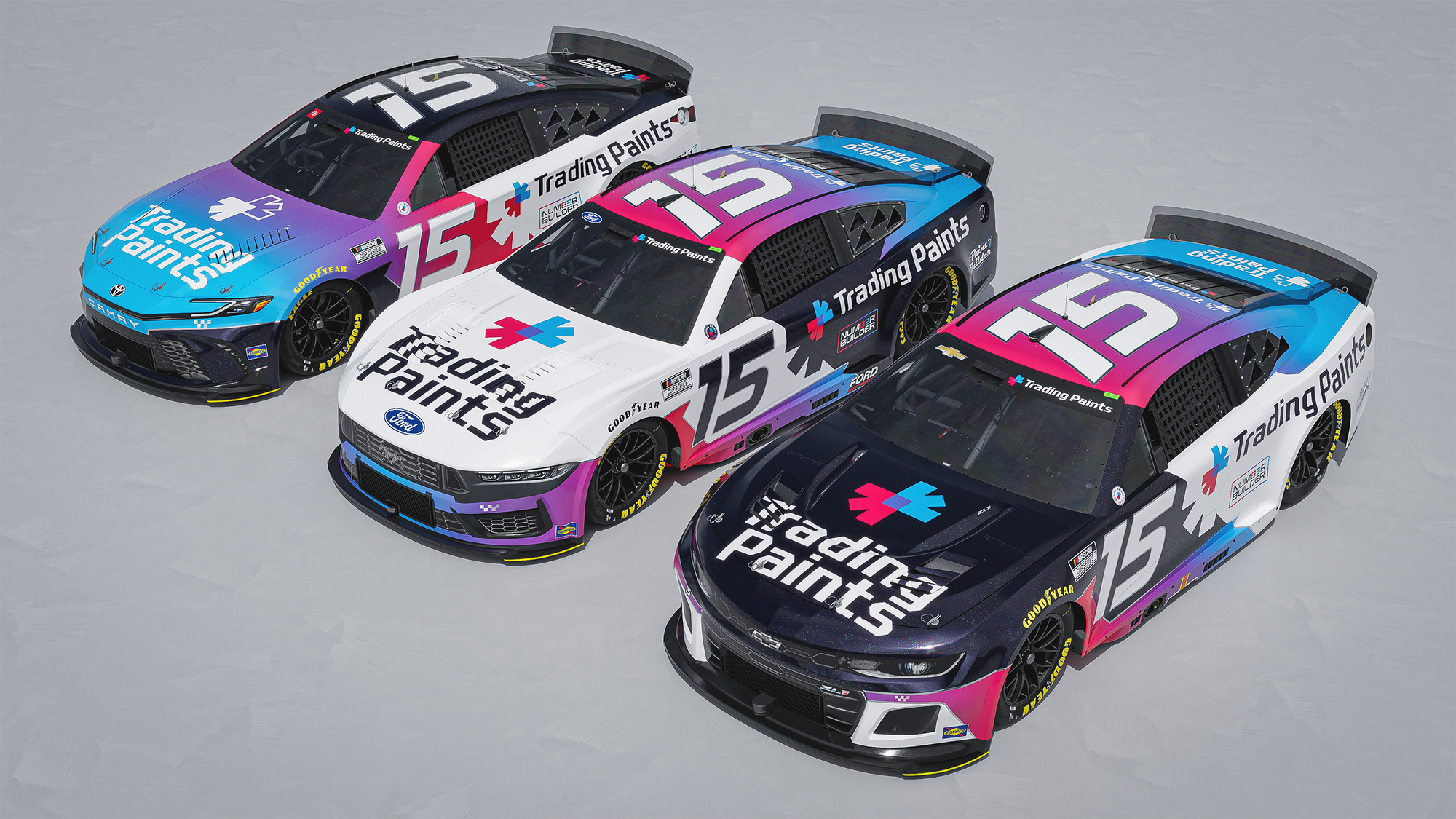
4️⃣ What’s your ‘trademark’ style that helps you stand out from other designers?
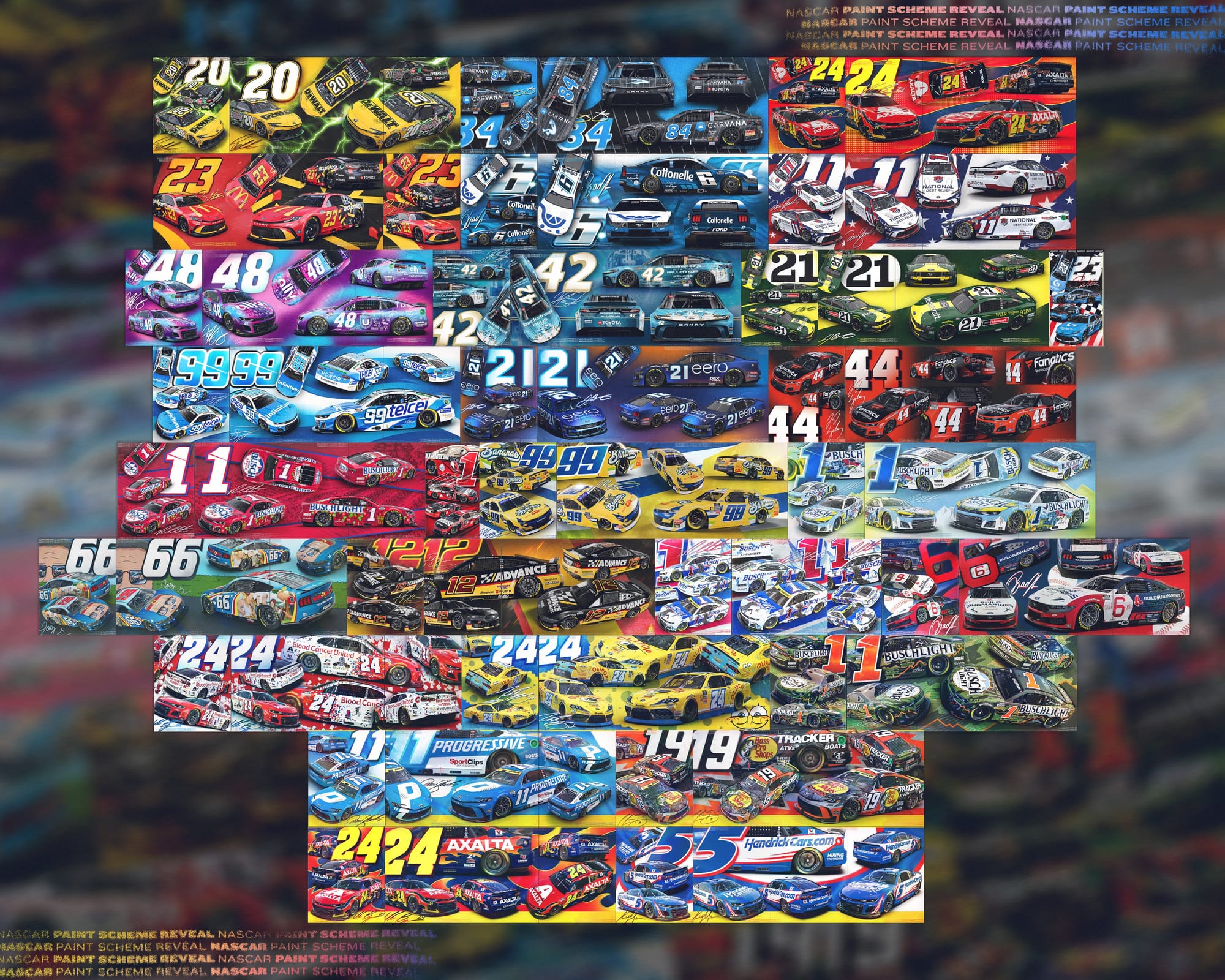
My style has been ever-changing as I learn and adapt year by year. I used to over-design almost everything before I got into the know and how of real-world design processes, which then led me to minimizing my designs to a point that they were almost under-designed.
By now, I am somewhere in the middle, depending on what I’m working on and what is requested, which varies heavily and constantly. Through all those changes and phases, my trademark style to me personally, has started to feel like a giant mosaic of everything and everyone I’ve been inspired by, dating all the way back to my very first memories of NASCAR.
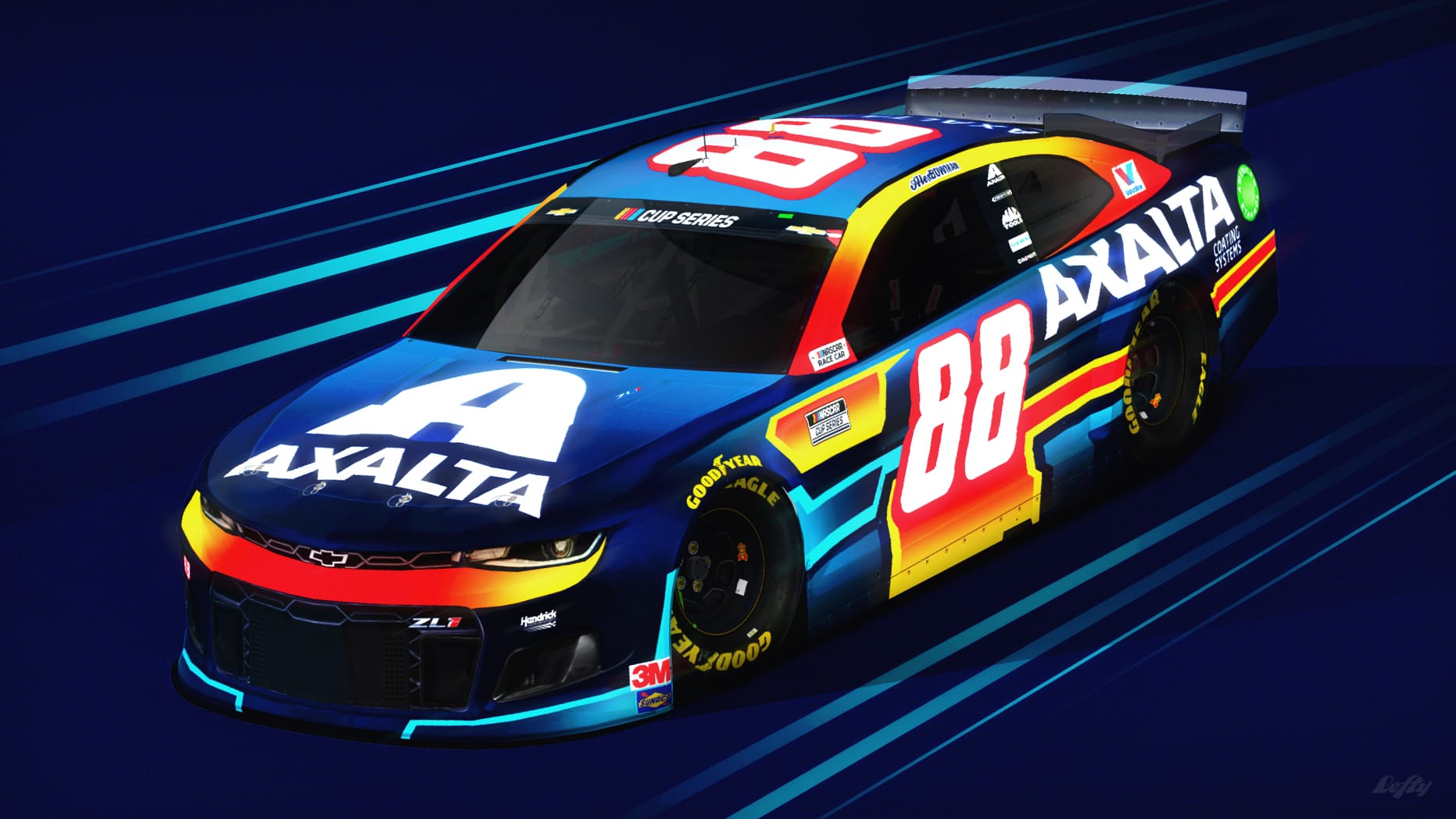
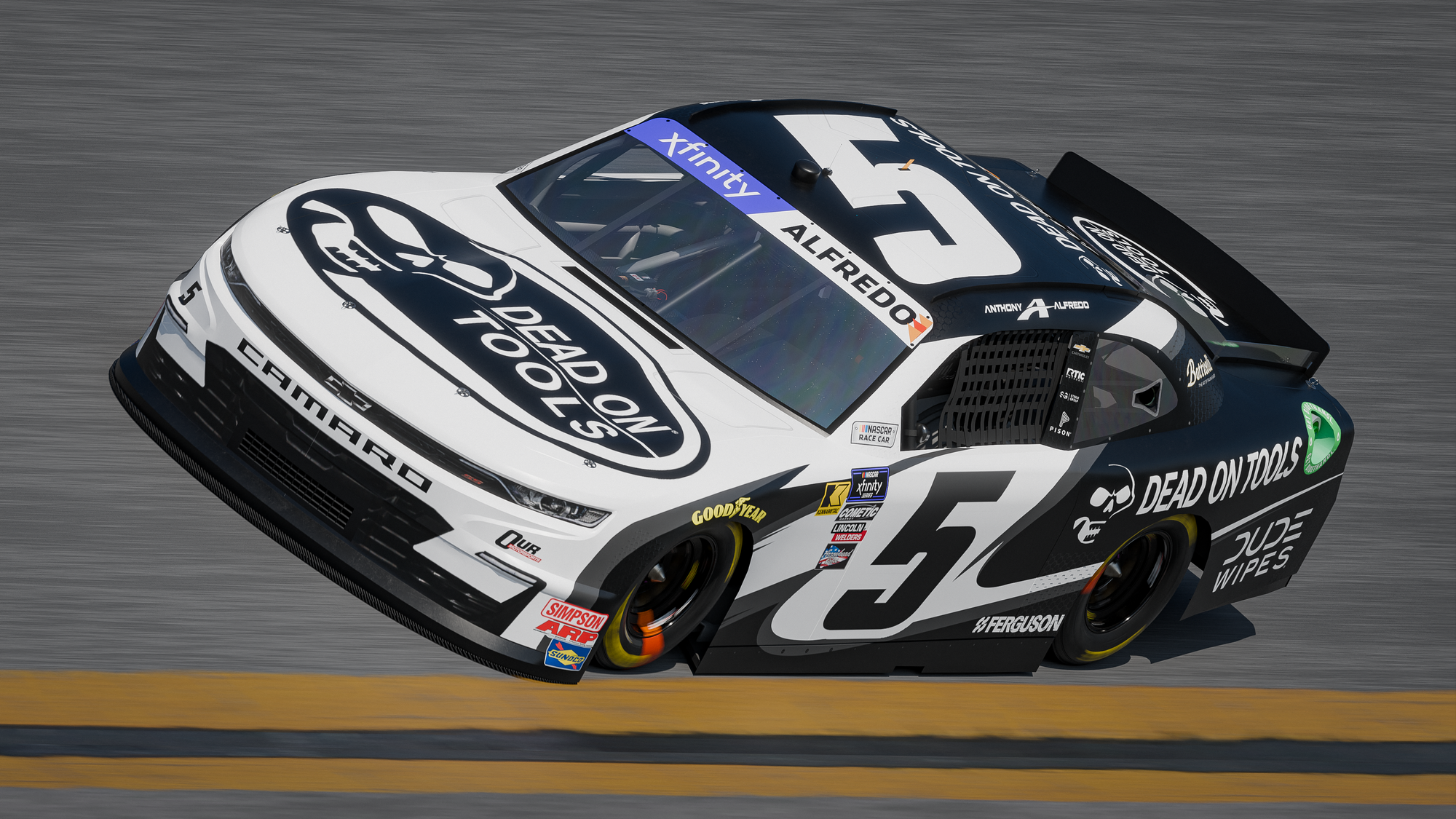
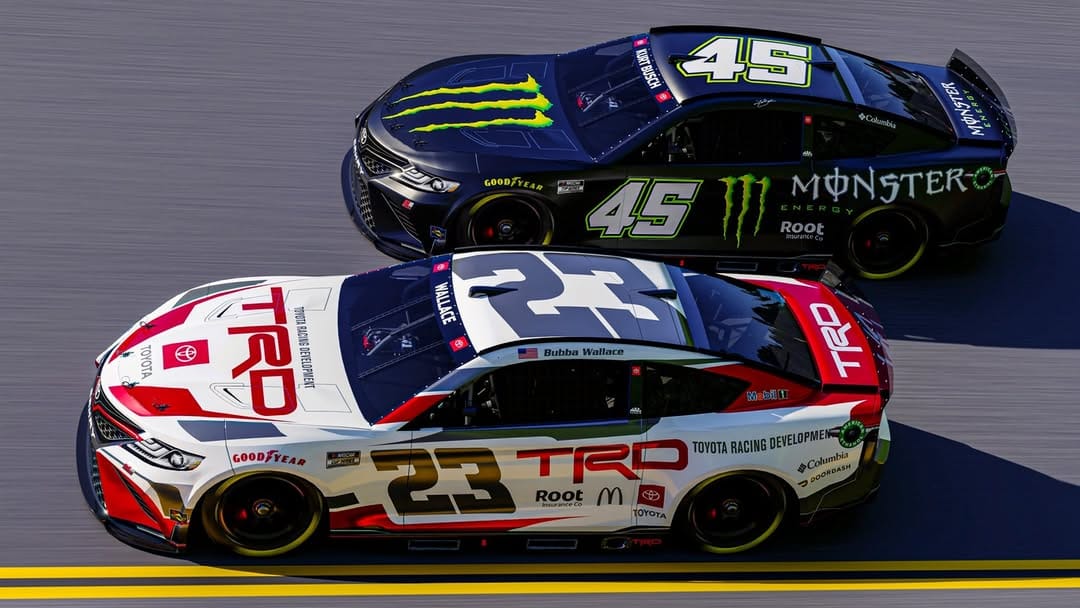
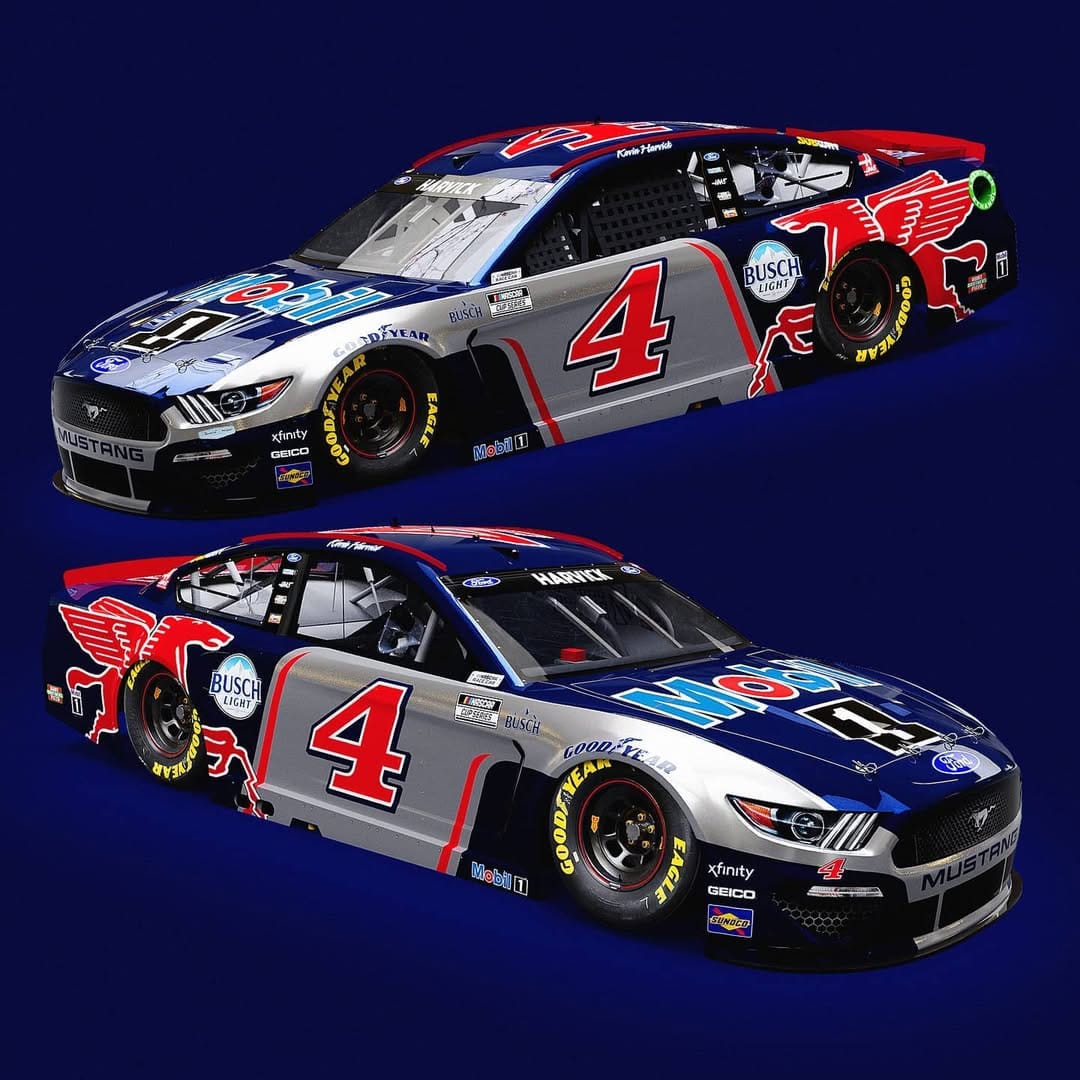
As far as a design style, Noah’s portfolio includes the loud and disruptive, along with the simple and elegant. (Photo Credits: Noah Sweet)
5️⃣ You were offered a dream opportunity to redesign the iconic No. 24 AXALTA Chevrolet for the 2025 season. As someone who grew up admiring the greats of the sport, what was that process like, and how were you able to balance the pressure of redesigning such an iconic sponsor and number duo?
The process was almost no different in a methodical sense when it came to the concept phase all the way to the wrap install.
The agency I worked with did acknowledge my past concept work on social media, as well as how important it was for me to design a new race car based on the famed work of Sam Bass. Those aspects ended up directly inspiring every concept we went through. With a few compromises, it took a few pushes and pulls to get the design the way I wanted.
Regardless of how I wanted it to look, I had to remind myself that I would have to make something that could be recognized while still respecting how much leeway I was given to be creative within the requested branding guidelines. Seeing how many people reached out to me with messages akin to connecting with their parents over the old [Jeff] Gordon flames after [William] Byron’s Daytona 500 win told me we did what we set out to do for that design.
It was a dream come true.
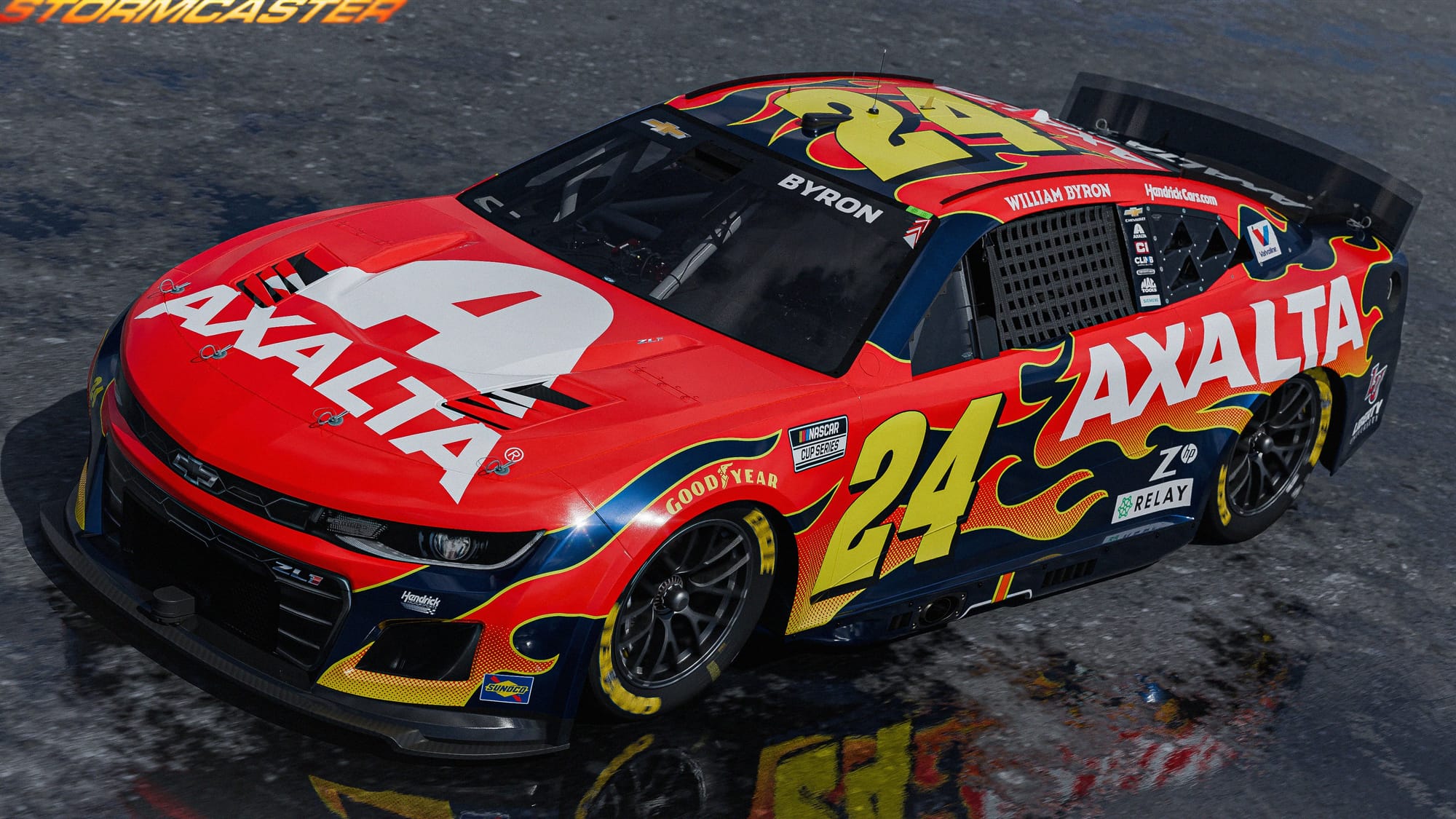
The 2025 AXALTA Chevrolet, officially dubbed “Stormcaster”, won its debut race — the 2025 Daytona 500. (Photo Credits: Noah Sweet)
6️⃣ When you broke onto the scene, your renders and animations inspired many others — including this author — to take on a new challenge in the 3D space. Do you remember the first time you entered into the 3D space and why did you decide to?
It was truthfully all in hopes of making my own artwork more presentable. I was dabbling with rendering still shots in Blender shortly after I started to get a large following for my concept paint schemes in iRacing around 2019-20. Once I learned how to animate around 2022-23, it has since led to paint schemes taking a major backseat when it comes to big-client work that comes my way in the past year and a half.
Since I decided to channel time and an embarrassing amount of money into a PC that can render as fast as possible, I’ve found myself presenting other companies’ artwork with my 3D skills more often than when I’m presenting my own designs.
The reveal animation for the 2025 AXALTA Chevrolet for William Byron (Credit: Noah Sweet)
7️⃣ Your animation scenes go from fast on-track motion to quaint backgrounds. Take us through your process and your creative decisions.
Oftentimes it’s much easier to do your own vision when it comes to 3D work. Since most of the time when a client has a very specific project request, you’ll either have to ask your client if they can cover the cost of some 3D marketplace assets, or if you have the time, you can make it all yourself.
It’s also much easier to do your own vision since you’ll know what assets you already have on hand, and what specific parts of each program you know how to use. It happens more often than I’d care to admit, but some projects do require me to throw YouTube University up on another monitor to recreate what a client is asking to make — but I do my best to predict the timeline whenever there’s new parts I have to work on.
It’s always safe to let the client know that something may be new to you, as long as you’re letting them know that you know a way to figure it out. Once you’ve gone through a few projects it’ll get easier to understand what is asked nearly every time, like setting up each shot to fit in 16×9 and 9×16 or if there needs to be two different versions of an animation with a different car in it.
Save your files and back them up; they can and will always help you in future projects.
8️⃣ Your portfolio has a plethora of schemes for a multitude of teams and manufacturers. Are there any designs in your history that you still look back on where you tell yourself, “I really designed that”?
It will always go back to the 2025 Axalta/Raptor cars. During the summer, I walked right into my local hobby shop and walked right out with the Losi RC NASCAR Raptor. I had always wanted a real-deal RC car growing up with the motivation to paint it and slap stickers on it, so it felt like yet another full-circle moment for me.
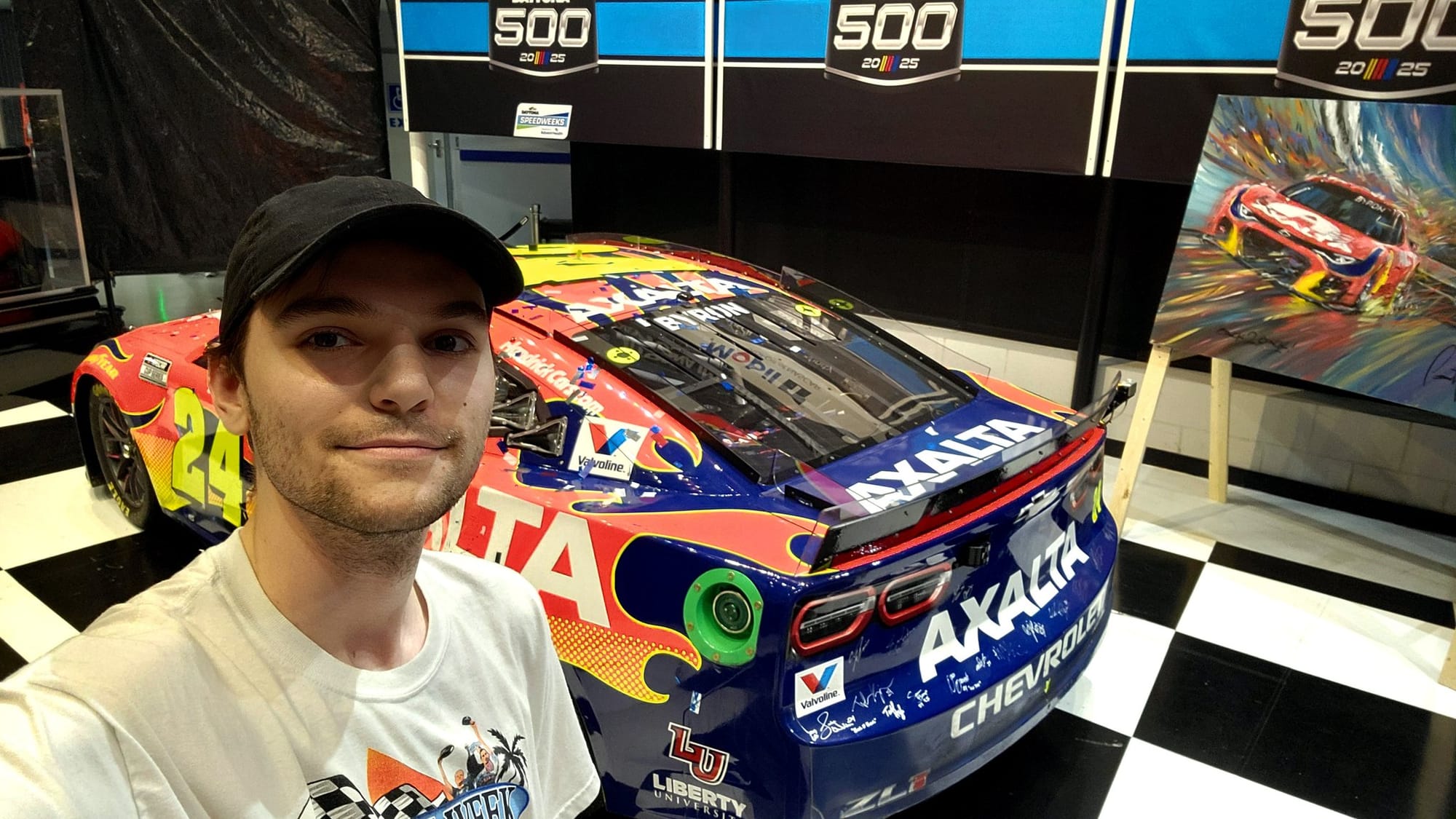
I got to see the Axalta car with my childhood sweetheart Snowy in the Motorsports Hall of Fame shortly after the 500 as well. It was the very first time I had ever seen one of my own designs on a [NASCAR] Cup car in person before seeing the Raptor at my home track later in the summer. It really meant a lot to me that Snowy and I got to see that Axalta car up close after she encouraged me to continue being artists while we grew up together. I will never forget it; it will always mean the world to me.
I wouldn’t have received the opportunity to design these cars had I not spent all that time designing my own visions over the years and posting them for the NASCAR community to see along the way.
9️⃣ Along with your range of paint schemes, you’ve taken up many freelance opportunities with NASCAR. For being a fan of the sport, talk about the level of pride you feel when you see your work be enjoyed by millions across social straight from the series accounts.
The greatest feeling is when I see fans resonate with my work in the way I intended. Whenever I successfully design something with artistic intention — to invoke a specific response from a fanbase, community, anyone — it makes me feel as close to a real artist as I could ever get.
I spent almost my entire childhood not knowing how to communicate or converse with anyone very well; the only thing I could truly and completely convey was my artwork. It expressed my interests in stuff like video games, cartoons, movies, sports and especially racing better than my own words ever could.
🔟 Share a design tip for people just getting started.
You have to love what you’re putting in your work, regardless if your work gets traction online. If you don’t enjoy what you’re making and communicating, much like conversation, art can be very easy to give up on when no one is listening to you.
But you’ll also have to dislike your work so much that you’re willing to scrap it when it comes time to grind up all your old projects into what you decide to make next.
Stare at everything you make until you can give yourself a good reason to change something on it — the colors, the hierarchy, the font, anything. To truly get better, you have to convince yourself that you can always learn more and make something old into something new if time permits it.
Talented creatives always find new ways to impress because they are inspired by everything they experience. It’s very common for trends to go stale quickly nowadays, whether it is something that works initially and becomes background noise with time, or through others adapting a successful style and forcing fatigue. Even the simplest of styles from the greatest of artists have undergone changes whether it be new tools or a wide spread change in the industry.
You will learn, and you will change with your art. It’s best to embrace it all.
Video Credit: Noah Sweet
For more, check out Noah on Trading Paints and Instagram.